 |
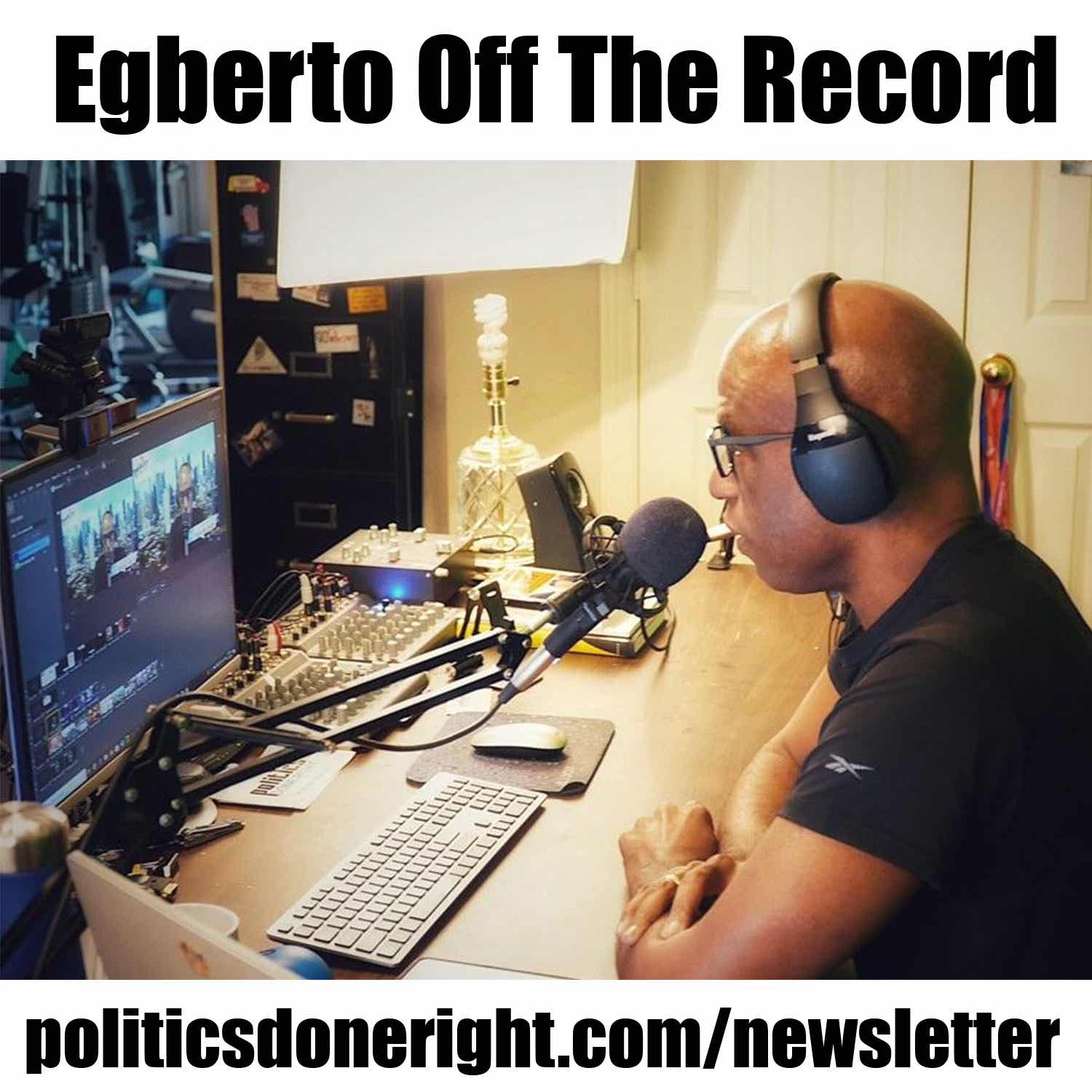
Egberto Off The RecordPodcasts for Egberto Off The Record Author: Fact-Based Political News & Opinion
Live versions of my Politics Done Right media/radio show. Included are Egberto Off The Record Substack lives with other Substackers. We also include some interviews from the media/radio show with politicians, activists, and engaged citizens. And of course, you get some of my Off-The-Record commentary. egberto.substack.com Language: en Genres: News, News Commentary Contact email: Get it Feed URL: Get it iTunes ID: Get it |
Listen Now...
LIVE! Healthcare Greed, Trump’s Alaska Lawsuit, Lula’s Victory, and Christie Exposing the GOP’s Moral Rot
Monday, 26 October, 2026
Thank you Jason Gael, Farmers AGAINST trump., Under the Golden Boot, Elwyn Hudson, Donna Everett, and many others for tuning into my live video!* How Capitalist Healthcare Turns Doctor’s Offices Into Profit Centers: Hospital buyouts turn routine doctor visits into revenue opportunities. How facility fees expose healthcare’s extraction model—and why universal care needs public accountability. [More]* Trump’s Alaska Lawsuit Exposes GOP Hypocrisy About Voter Confusion: Trump’s Alaska lawsuit exposes a double standard: invoke voter confusion to protect Republican power while smears distract voters from healthcare, wages, and corporate greed. [More]* Latin America’s Rightward Turn Meets Resistance: Lula Wins, Workers Demand More: Lula defeats Flávio Bolsonaro as Brazil interrupts Latin America’s rightward turn. Explore religious disinformation, Trump’s pressure, and the fight for working people. [More]* Chris Christie Exposes the GOP’s Rotten Moral Core—and the Voters Who Enable It: Chris Christie condemns Trump’s GOP as Ramaswamy’s Amy Acton ad exposes a deeper crisis: political cruelty, partisan loyalty, and voters’ moral responsibility.Politics Done Right Program/Chat AnalysisProgram summaryThe October 26 afternoon broadcast combined renewed optimism about organized resistance with an uncompromising demand for political and economic accountability. Its central message connected democracy to everyday survival: defeating authoritarian politics must also produce affordable healthcare, stronger wages, family security, and freedom from corporate exploitation. The host urged viewers to vote, then remain organized enough to challenge elected Democrats who abandon those priorities.The program developed five major themes:* International resistance as a source of hope. The host celebrated Lula’s victory in Brazil and described developments in Serbia and South Korea as examples of sustained popular resistance. The discussion presented organizing, youth participation, and persistence as answers to political fatalism. A Spanish-language clip of Claudia Sheinbaum reinforced the argument that poverty reflects structural economic choices rather than individual failure.* Republican cruelty and voters’ moral responsibility. Chris Christie’s criticism of the Ramaswamy advertisement targeting Amy Acton opened a broader discussion about the GOP’s moral direction. The host questioned the limits of persuasion when voters understand harmful conduct yet continue rewarding it. The emphasis moved beyond misinformation to responsibility for knowingly enabling cruelty.* Democratic victories must deliver material improvements. The host argued that neoliberal failures helped create the conditions for Trump’s rise. Medicare for All, higher wages, paid family leave, and childcare emerged as concrete demands. He advocated voting Democratic throughout the ballot while preparing to scrutinize corporate influence and challenge Democrats who retreat after winning.* Generational hardship and family solidarity. A substantial audience-driven discussion examined millennials’ financial struggles, student debt, and pressure to establish separate households. The host defended multigenerational living as a way to preserve family resources and questioned economic messages that equate independence with taking on additional rent, bills, and debt.* Healthcare extraction and electoral participation. The final major segment examined hospital acquisitions of doctors’ offices and the resulting hospital-level charges for routine care. The host framed those practices as predictable consequences of profit-driven healthcare. Caller Ray Brackens then discussed Texas voting procedures, the former straight-ticket voting option, and uncertainty about when election results might become clear.The broadcast closed with appeals to support independent media and participate in election-night coverage. Its message remained consistent: electoral victory begins the work of accountability rather than completing it.Programming distinction: Although the advance program package included Trump’s Alaska lawsuit, the supplied broadcast transcript does not contain a substantive segment on that topic. International politics, Democratic accountability, and the generational discussion occupied that time.Chats’ sentimentThe dominant mood combined progressive solidarity, political anger, and energized participation. Substack functioned primarily as a supportive community conversation. The Facebook-labeled feed—which also contained @-style handles and Restream messages—featured more ideological confrontation and news-link sharing. These observations describe the supplied comments, not the entire viewing audience.Hope and international solidarityBrazil generated some of the clearest expressions of enthusiasm. [Montgomery County Young Democrats] expressed solidarity and acknowledged earlier anxiety about the outcome. [RLM] celebrated Brazil’s result, while [Los Gatos Sin Madrid] emphasized the perseverance of Serbian students.The Sheinbaum clip also resonated. [SkyBlueEyes] praised her leadership and advocated giving women greater political authority. [Laura K] welcomed the speech, and [Farmers AGAINST trump.] expressed admiration while requesting translation. These responses suggest that international examples gave supportive viewers both encouragement and language for discussing domestic political struggles.Moral outrage and impatience with Republican enablersThe Christie segment elicited anger rather than reconciliation. [SkyBlueEyes] considered his criticism inadequate and objected to Trump’s support for the Acton advertisement. [Joanna] argued that Trump had brought hatred into the open. [Brittani] expressed intense frustration that allegations involving harm to children did not establish an unmistakable moral boundary.These comments aligned with the host’s argument that political accountability must include voters who knowingly excuse harmful conduct. Some supportive comments also used dehumanizing comparisons, indicating that portions of the discussion escalated from condemnation of behavior into contempt for political opponents.Healthcare anger grounded in personal experienceHealthcare produced especially concrete engagement. [Lynette] described her husband’s doctor billing as an outpatient hospital clinic and characterized the arrangement as a scam. [Farmers AGAINST trump.] reported a $36,000 hospitalization involving a broken arm and a $6,000 charge for a three-mile ride to the hospital.[Don] repeatedly emphasized the profit motive. [RLM] described the system in terms of exploitation, while [Laura K] argued that patients become profit centers. [Paul Fleming] shared healthcare reporting and commentary about the industry’s costs.These personal accounts supplied the strongest connection between the program’s structural critique and viewers’ everyday experiences. The reported bills remain commenters’ accounts, rather than independently verified charges.Agreement on economic injustice, disagreement over generational blameThe discussion of baby boomers produced the clearest disagreement within the otherwise supportive Substack conversation.[Don] rejected collective blame, emphasizing that he had not voted for the policies under criticism. [Laura K] similarly distinguished among boomers, describing a history of supporting progressive causes and practicing multigenerational family assistance while agreeing with the critique of capitalism.[@debdenny7552] added another important qualification: remaining in the family home had not been a viable option in her own life.The disagreement concerned the breadth of the framing. These viewers did not necessarily reject the economic argument; they challenged language that treated a generation or family arrangement as a uniform experience.Voting enthusiasm alongside frustration with disengagementSeveral participants turned the conversation toward action. [Leslie in CA] asked whether everyone planned to vote and reported having voted. [Laura K], [Farmers AGAINST trump.], and [@jackiecampise9392] also reported completing their ballots.The most direct statement of the program’s influence came from [@patrickmagner3758], who said information learned on the show prompted a vote for Rosenthal. That provides a specific, self-reported example of the broadcast informing an electoral decision.Meanwhile, [Brittani] described difficulty persuading a longtime nonvoter who believed nothing could change. Her comment illustrated the fatalism the program’s opening sought to overcome.Ideological opposition and escalating exchanges[@BigMoPrepper] repeatedly alleged fraud in Brazil’s election, attacked left-wing economic ideas, and called for Trump to arrest Lula. The comments relied on comparisons between first- and second-round vote totals; the supplied chat contained no substantiation establishing fraud. Their repetition made election denial a recurring oppositional theme.[@Laketravisanyone] challenged the host on capitalism, work, generational wealth, political donations, and homeownership. Some comments posed policy questions, while others personalized the dispute around the host’s finances and family arrangements.[L_Deneuve] responded with an insult, illustrating how quickly ideological disagreement could become interpersonal hostility. [@debdenny7552], by contrast, urged checking dramatic news claims against multiple sources.Community warmth sustained participationPolitical conflict did not define the entire conversation. [Lynette] repeatedly welcomed participants, checked on family health, and promoted the book club and future broadcasts. [Farmers AGAINST trump.] discussed babysitting grandchildren and illness in the household. [Toothpicker], [Donna Everett], and others maintained friendly exchanges alongside the political discussion.That social connection matters. The chat operated as a continuing community where participants combined political engagement with recognition, humor, and mutual concern.The program’s strongest audience connection emerged when it linked political power to tangible experiences: medical bills, family finances, voting, and frustration with unresponsive leadership. Supportive viewers expressed hope without surrendering their demand for accountability. The principal tensions involved generational generalizations and hostile ideological exchanges, while the clearest practical outcome came from viewers reporting completed ballots and one commenter explicitly crediting the program with informing a vote.Politics Done Right Program/Chat AnalysisThis post has bonus content for paid subscribers. Upgrade to get full access.[WP-ROUTING]Site: PoliticsDoneRight.comCategory: Coffee Party ShowsPubDate: 2026-10-26T15:00:00Tags: Politics Done Right, Healthcare, Capitalism, Healthcare Profiteering, Hospital Consolidation, Facility Fees, Universal Healthcare, Medicare for All, Donald Trump, Alaska Senate Race, Voting Rights, Election Certification, Republican Hypocrisy, Lula, Brazil Elections, Flávio Bolsonaro, Latin America, Labor Rights, Religious Disinformation, Chris Christie, Vivek Ramaswamy, Amy Acton, Political Accountability, Corporate Greed, Progressive Politics This is a public episode. If you'd like to discuss this with other subscribers or get access to bonus episodes, visit egberto.substack.com/subscribe