 |
The Christian Mind ResetMy personal Substack Author: The Christian Mind Reset
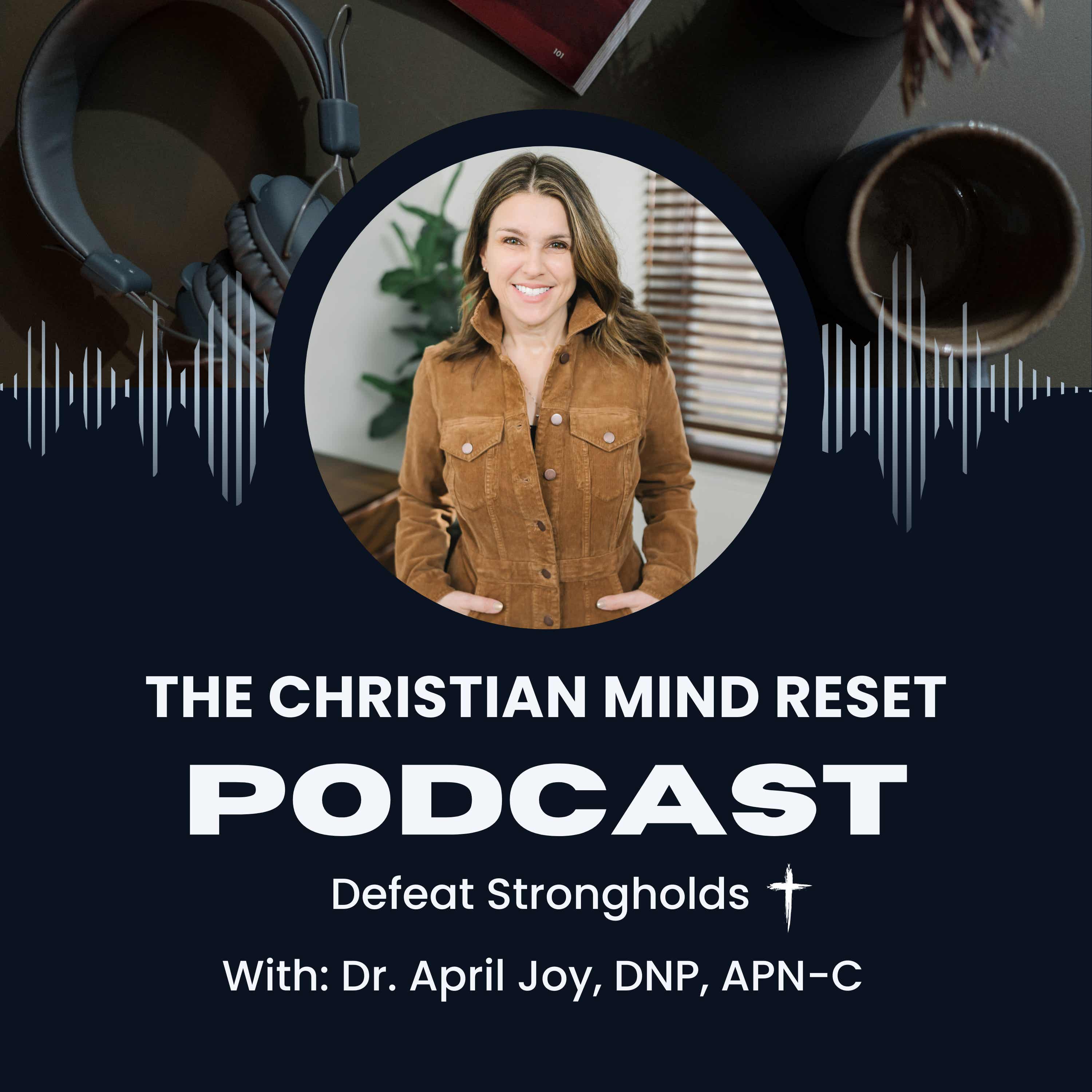
The Christian Mind Reset blends Scripture, psychology, and neuroscience to help you renew your thoughts and break mental strongholds. Hosted by April Joy DNP, APN-C (@thechristianpsychnp), each episode explores real struggles, intrusive thoughts, anxiety, and how Gods Word rewires the brain. Learn how to feed truth instead of strongholds and walk in the peace Christ promises. thechristianmindreset.substack.com Language: en Genres: Christianity, Religion & Spirituality, Science Contact email: Get it Feed URL: Get it iTunes ID: Get it |
Listen Now...
Intrusive Thoughts, Taking Thoughts Captive, and the Neuroscience of Renewing the Mind
Episode 13
Wednesday, 17 June, 2026
SHOW NOTESHave you ever had a thought enter your mind that felt disturbing, unwanted, or completely inconsistent with who you are?Many Christians experience intrusive thoughts and immediately feel fear, guilt, or shame. They wonder if the thought means something about their character, their faith, or their relationship with God.But what if the presence of a thought is not the same thing as agreement with a thought?In today’s episode of The Christian Mind Reset, Dr. April Joy explores intrusive thoughts through the lens of Scripture, neuroscience, and psychology. You’ll learn what intrusive thoughts are, why they occur, what happens in the brain when unwanted thoughts become “sticky,” and how biblical principles align with what we know about attention, thought patterns, and neuroplasticity.We’ll discuss the neuroscience behind intrusive thoughts, including the role of the amygdala (the brain’s alarm system), the hippocampus (memory processing), and the prefrontal cortex (reasoning and decision-making). We’ll also examine Daniel Wegner’s famous “White Bear” studies and why trying to force thoughts away often makes them more noticeable.Most importantly, we’ll explore what Scripture teaches about taking thoughts captive, renewing the mind, and finding freedom from shame.Today’s episode reminds us that we are not defined by every thought that enters our minds. Our identity is found in Christ.In This Episode• What intrusive thoughts are and why they are often misunderstood• The difference between a thought, a temptation, and an action• The neuroscience of intrusive thoughts explained in simple language• Daniel Wegner’s thought suppression research and the “White Bear” experiments• Why fighting a thought can sometimes make it feel stronger• Psalm 139 and the comfort of being fully known by God• What 2 Corinthians 10:5 means when it says to “take every thought captive”• Neuroplasticity and how repeated focus shapes the brain• Practical ways to respond to unwanted thoughts• Biblical truths for overcoming shame and fearKey ScripturesPsalm 139:1-3Psalm 139:23-24Philippians 4:82 Corinthians 10:5Romans 8:1Romans 8:62 Timothy 1:71 Peter 5:7Hebrews 4:15Key TakeawayThe thought that arrives is not your identity.Not every thought deserves your attention, agreement, or fear. Scripture teaches us to examine our thoughts, compare them against truth, and redirect our minds toward what is good, true, and praiseworthy. Through God’s Word, the renewing work of the Holy Spirit, and intentional focus, we can learn to respond to unwanted thoughts with wisdom rather than shame.Connect with Dr. April Joy:Connect with Dr. April Joy:Substack: The Christian Mind ResetIf you liked today’s episode, please subscribe, leave a review, follow, like, or share. You can find me on Instagram at @thechristianpsychnp and also on Instagram and Substack at The Christian Mind Reset for more Scripture, neuroscience, and practical tips for renewing your mind.My eBook, The Christian Mind Reset: A 28-Day Psalms Guide to Biblical Meditation, Neuroscience, and Renewing Your Mind, is available in my Stan Store at https://stan.store/thechristianpsychnpDisclaimerDisclaimer: This podcast/letter is for informational purposes only. It contains general information, drawn from my experience, research, and best practices. It is not health care advice, and is not intended to replace the counsel of your health care provider. Consult your provider before starting any new treatments or making changes to your health routine. This message does not constitute a provider-patient relationship between us.If you are experiencing significant anxiety, distress, or need support, please seek care from a qualified healthcare professional. You may also consider reaching out to a licensed Christian counselor or pastor for additional support.Emails, portal messages, text messages, and other communications are not monitored and will not receive a response in an emergency or crisis, or regarding medical or therapy advice. These methods should never be used for medical advice, therapy, urgent, crisis, emergent, or time-sensitive concerns. If you are experiencing a medical or psychiatric emergency, are in crisis, having thoughts of harming yourself or others, or feel unsafe, call 911 (US), or contact your local emergency services, or go to the nearest emergency room or hospital immediately.ReferencesAnderson, M. C., & Green, C. (2001). Suppressing unwanted memories by executive control. Nature, 410(6826), 366–369.Harvard Health Publishing. (2024). Managing intrusive thoughts. Harvard Medical School.Norman, L. J., Taylor, S. F., Liu, Y., Radua, J., Chye, Y., & de Wit, S. J. (2019). Error processing and inhibitory control in obsessive-compulsive disorder: A meta-analysis. Biological Psychiatry, 85(9), 713–725.Thomas Nelson. (1982). The Holy Bible, New King James Version. Thomas Nelson.Wegner, D. M., Schneider, D. J., Carter, S. R., & White, T. L. (1987). Paradoxical effects of thought suppression. Journal of Personality and Social Psychology, 53(1), 5–13. This is a public episode. If you would like to discuss this with other subscribers or get access to bonus episodes, visit thechristianmindreset.substack.com