 |
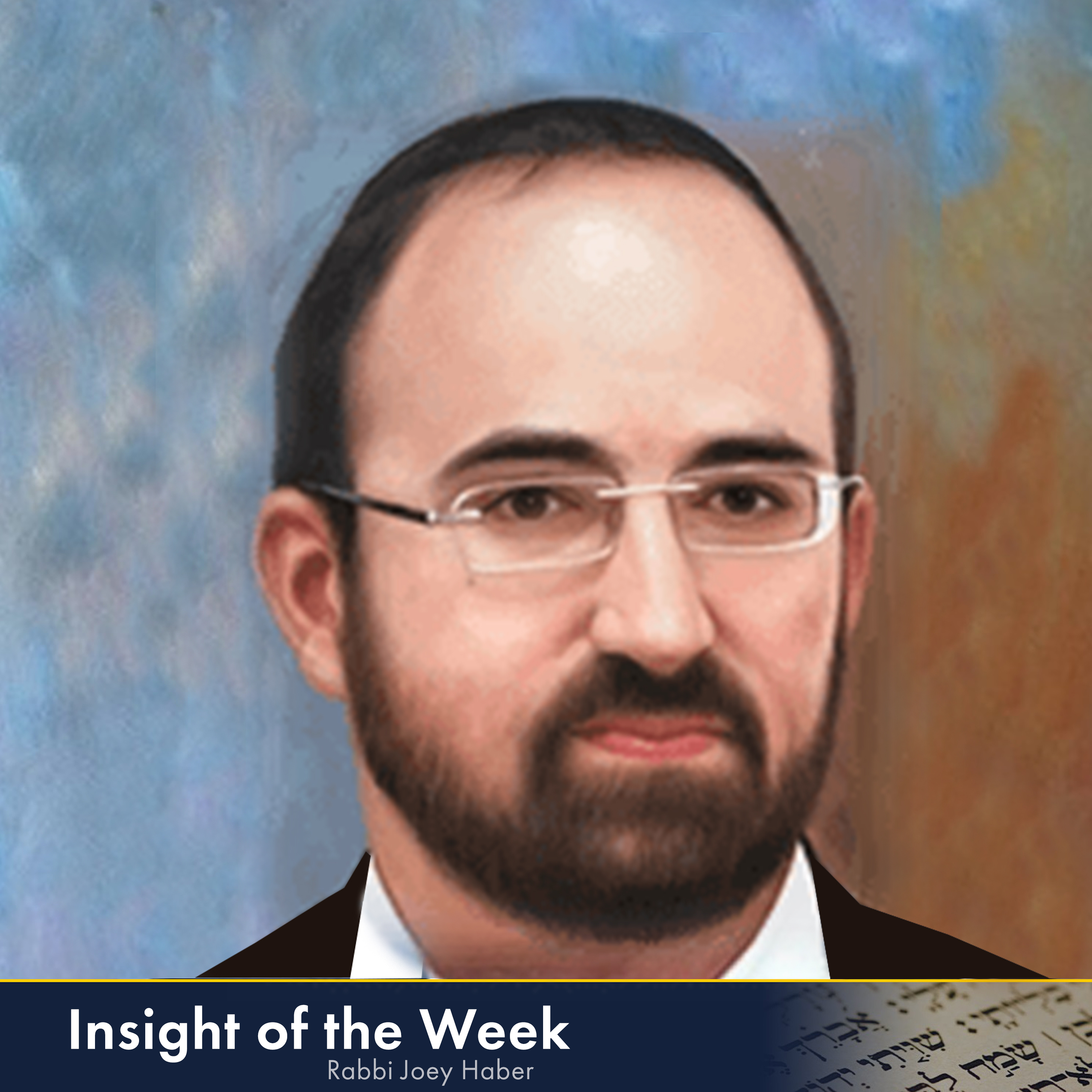
Insight of the WeekRelevant weekly insights by Rabbi Joey Haber Author: Rabbi Joey Haber
Relevant weekly insights by Rabbi Joey Haber - delivered directly to your computer and/or mobile device Language: en-us Genres: Judaism, Religion & Spirituality Contact email: Get it Feed URL: Get it iTunes ID: Get it |
Listen Now...
Let’s Stop Judging
Wednesday, 22 October, 2025
Noah is one of three people in the Humash who are described as having "found favor" – מצא חן . The final pasuk of Parashat Bereshit says that Noah מצא חן בעיני ה' – "found favor in G-d's eyes." Later in the Book of Bereshit, we read that Yosef "found favor" in the eyes of his master, Potifar, for whom he worked as a slave ( וימצא יוסף חן בעיניו ). And in the Book of Shemot, Hashem tells Moshe Rabbenu that he "found favor" in His eyes ( כי מצאת חן בעיני ). Some commentaries added that, in fact, Yosef and Moshe are subtly mentioned in the beginning of Parashat Noah. The first pasuk of this parashah describes Noah with two adjectives – צדיק ("righteous") and תמים ("complete"). The word צדיק is associated with Yosef, who is often referred to as יוסף הצדיק , and the word תמים alludes to Moshe Rabbenu, who lived with perfect faith and devotion to Hashem. What is the connection between these three figures – Noah, Yosef and Moshe? The answer is that Yosef and Moshe together corrected Noah's mistake. Noah was, on the one hand, a great man, thanks to whom the world was literally saved, but at the same time, he was guilty of a serious flaw. This is indicated by a pasuk in Yeshayahu which refers to the flood as מי נח – "Noah's waters," suggesting that Noah was somehow to blame for the flood. The Zohar explains that Noah was informed long before the flood of Hashem's intention to destroy the earth – and he did nothing to stop it. He just heeded Hashem's command to build an ark for himself and his family. He had 120 years' notice – but he did not pray for his generation. He did not try to come to their defense, and plead to Hashem to spare them. And so he was, in a certain sense, responsible for the catastrophic flood. Yosef and Moshe exhibited the precise opposite quality. Yosef was betrayed by his brothers, who threw him into a pit to kill him, and then sold him as a slave to a foreign country. But Yosef did not seek revenge. His response was not to get back at them. Instead, he forgave them and even took care of them, providing them food during a severe famine. Yosef, the great צדיק , looked for the good instead of focusing on the bad. He continued loving his brothers despite what they did to him. This quality was continued by Moshe Rabbenu, who repeatedly prayed to Hashem's on behalf of Beneh Yisrael , even when they committed very serious sins. When Hashem decided to annihilate the nation after they worshipped the golden calf, Moshe did not just say "ok" like Noah did. Instead, he petitioned Hashem on their behalf, going so far as to demand that if Hashem destroys the people, he should be destroyed with them. He declared that if Hashem did not forgive the people, then מחני נא – he wanted to be "erased." The word מחני contains the same letters as the phrase מי נח – alluding to the fact that Moshe here corrected Noah's grave mistake. Instead of accepting Hashem's decree against the people of his time, Moshe interceded and prayed that they be saved. The difference between these two attitudes – that of Noah, and that of Yosef and Moshe – is the difference between judging and reserving judgment. Noah looked at the people of his generation, saw everything they did wrong, and decided they deserved to be punished. But Yosef and Moshe didn't rush to judge. Yosef's brothers, and Beneh Yisrael in Moshe's time, acted wrongly, but Yosef and Moshe didn't right away condemn them. They understood that there's so much more than what meets the eye. There's so much going on beneath the surface. No one can ever understand what other people are going through, what kind of struggles they're dealing with, what kind of challenges they face, what kind of pressure they're under. So many things contribute to the way a person acts – and nobody knows any of it. So we cannot judge. And when we don't judge, we wish people well and pray for their wellbeing. We don't get angry and look down at them – we do just the opposite. We look at them the way Yosef looked at his brothers and the way Moshe looked at the people. We look at them kindly and lovingly, even though they did or do things wrong. I cannot tell you how many times it happened that a couple who seemed so happy together, who seemed to have such a wonderful marriage, ended up getting divorced, or turned out to be having a very hard time in marriage. None of us know what other couples are going through. None of us know what kind of struggles other parents are having with their kids. None of us know all the details of our fellow's background and upbringing that could have caused his wrong behaviors. In short, none of us know practically anything about other people, about why they do what they do. Everyone, without exception, is struggling with something that we know absolutely nothing about. So let's stop judging, and start loving. Let's learn from Noah's mistake, and follow the examples set by Yosef and Moshe. Let's give people the benefit of the doubt, try hard to see all the good they do instead of focusing on the bad, and show them lots of love, friendship, and support.