|
Duke's CornerAuthor: Jim Grisanzio
Duke's Corner is a forum for conversations with Java developers. Tune in to connect with the community and learn how developers are innovating with Java around the world. Host: Jim Grisanzio, Oracle Java Developer Relations @jimgris Language: en Genres: News, Tech News, Technology Contact email: Get it Feed URL: Get it iTunes ID: Get it |
Listen Now...
Paul Bakker: Go Build a Lot of Stuff!
Tuesday, 3 February, 2026
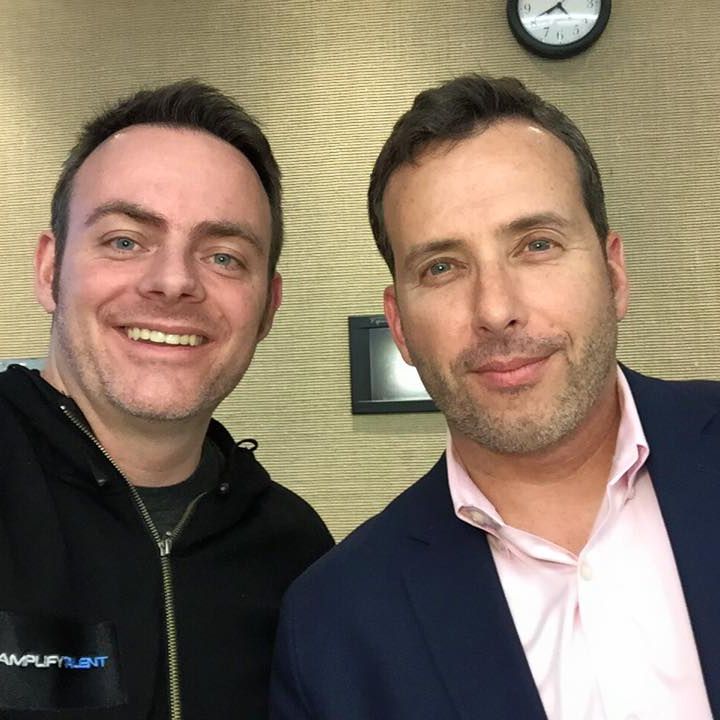
This is the third in a short series of speaker profiles for JavaOne 2026 in Redwood Shores, California, March 17-19. Get early bird pricing until February 9, and for a limited time, take advantage of a $100 discount by using this code at checkout: J12026IJN100. Register. Sessions. In this conversation, Jim Grisanzio from Java Developer Relations talks with Paul Bakker, an engineer and Java architect in California. Paul is a staff software engineer in the Java Platform team at Netflix. He works on improving the Java stack and tooling used by all Netflix microservices and was one of the original authors of the DGS (GraphQL) Framework. He is also a Java Champion, he's published two books about Java modularity, and he's a speaker at conferences and Java User Groups. Java Is Everywhere at Netflix Paul will present "How Netflix Uses Java: 2026 Edition" at JavaOne in March. The session updates previous year's talk because Java keeps evolving at Netflix. "Netflix is really staying on the latest and greatest with a lot of things," Paul says. "We're trying new things. And that means there's always new stuff to learn every year." Java powers both Netflix streaming and enterprise applications used internally and supporting studio teams. "Java is everywhere at Netflix," Paul says. "All the backends, they are all Java powered." Why Java? It comes down to history and practicality. The original team members were Java experts, but more importantly, "Java is also just the best choice for us," he says. The language balances developer productivity and runtime performance. At Netflix's scale with thousands of AWS instances running production services, runtime performance is critical. Netflix engineers stay closely connected with development at OpenJDK. They test new features early and work with preview releases or builds before official releases. When virtual threads appeared, Netflix engineers tested immediately to measure performance gains. Paul says they give feedback on what works, what doesn't work, and what they would like to see different. This just demonstrates the value of being involved with OpenJDK, and Paul says they have a really nice back and forward with the Oracle engineering teams. The microservices architecture Netflix adopted years ago enabled the company to scale. This approach has become common now, but Netflix pioneered talking about it publicly. Breaking functionality into smaller pieces lets teams scale and develop services independently. Most workloads are stateless, which enables horizontal scaling. Production services for streaming often run several thousand AWS instances at a time. Early on with Java Applets Paul's coding journey started at 15 when he got his first computer and wanted to learn everything about it. Working at a computer shop repairing machines, the owner asked if he knew how to build websites. Paul said no but wanted to learn. He was curious about everything that involved computes. Java applets were hot back then. With nothing online available, he bought a book and started hacking away. "It was so much fun that I also decided right at that point basically like, oh, I'm going to be an engineer for the rest of my life," he says. That's clarity for a 15-year-old. And it's remarkable. But Paul says it felt natural. He just started doing it, had such a good time, and knew that was what he wanted to do. When he started university around 2000, right during the dot-com bubble and crash, professors warned students not to expect to make money in engineering because the bubble had burst. Paul still remembers how funny that seems now. You can never predict the future. Initially, he learned Java and PHP simultaneously. Java powered client-side applications through applets while PHP ran server-side code. The roles have completely reversed now. Engaging the Community Paul attended his first JavaOne in 2006. "Those were really good times," he says about the early conferences when everything felt big and JavaOne was the only place to learn about Java. Back then, around 20,000 people would travel to San Francisco every year. It was the one and only place to learn what was new in Java. All the major news would be released at JavaOne each year. The world has changed. Now information spreads instantly and continually online, but Paul misses something about those early days. The more recent JavaOne conferences offer something different but equally valuable. Paul points to last year's event in Redwood City as a great example. While the conference is still big, it's small enough that attendees can actually talk with the Oracle JDK engineers and have deeper conversations. The folks who work on the JDK and the Java language are all there giving presentations, but they're also totally accessible for hallway chats. "That makes it really interesting," Paul says. This direct access to the people building the platform distinguishes JavaOne from other conferences. Java User Groups also played an important role in Paul's development. He lived in the Netherlands before moving to the Bay Area nine years ago. In the Netherlands, the NLJUG (Dutch Java User Group) organized two conferences a year, J-Spring and J-Fall. Paul would go to both every year. That was his place to learn in Europe. He has been continuing that pattern right up until now, which is why he is speaking at JavaOne again. Open Source software has also been another major aspect of community for Paul. He has always been active in Open Source because he says it's a fun place to work with people from all over the world solving interesting problems. Besides being a critical part of his professional career, it was also his hobby. Paul says the Open Source aspect with the community behind it is maybe his biggest thing that he really enjoyed over the years. AI Throughout Development AI now occupies much of Paul's professional focus. At Netflix, engineers use AI tools throughout the development lifecycle. Paul uses Claude Code daily, though other developers prefer Cursor, especially for Python and Node work. Most Java developers at Netflix work with Claude Code. The tools integrate with GitHub for pull request reviews, help find bugs, and assist with analyzing production problems by examining log files. Paul describes using AI as having a thinking partner to t all to and code with. Sometimes he needs to bounce ideas around, and the AI gives insights he might have missed or suggests additional issues to consider. For repetitive tasks like copying fields between objects, AI handles the grunt work efficiently. "That's the nice thing about an AI," Paul says. "While a person would probably get really annoyed with all this feedback all the time and like having to repeat the work over and over again, but an AI is like, fine, I'll do it again." Go Build a Lot of Stuff! When asked about advice for students, Paul's answer comes quickly and has not changed much over the years. "I think what I really recommend is just go and build a lot of stuff," he says. "The way to get to become a better developer is by doing a whole lot of development." That's timeless advice students can easily adopt no matter how the modern tools for learning have changed. Paul had to go to a bookstore and buy a book to learn programming. Students today have AI tools to help them and advanced IDEs. But the fundamental principle remains the same, which is to build interesting applications. Paul recommends that students come up with a fun problem and just build it. You learn by making mistakes. You build a system, reach the end, and realize the new codebase already struggles with maintainability. Then you ask what you could have done differently. Those real-life coding experiences teach you how to design code, architect code, and write better code. Paul also suggests that students use AI tools but not blindly. Do not just accept whatever an AI generates. Instead, try to understand what came out, how it could have been done differently, and experiment with different approaches. Use the tools available but really understand what is going on and what options you have. Some students and even practicing developers worry that advanced tools might eliminate their future role as developers. Paul says that nobody knows exactly how things will look in the future because tools get better almost every day now. But AI tools are just tools. Someone needs to drive them and come up with the ideas they should build. Plus, the tools at present are far from a state where you can hand them a task, never look at it again, and have everything work perfectly. Substantial hand-holding is involved. "Is our daily work going to change? Very likely," Paul says. "That's already happening." But he tries to see this change as a positive thing. "It's a new tool that we can use. It makes certain parts of our job more fun, more interesting. You can get more things done in some ways and be open to it." Why Java Works At the end of the conversation, Paul answered a simple question — Why Java? What makes it great? — with a simple and direct answer: "Java is the perfect balance of developer productivity and runtime performance." That balance matters where Paul works at Netflix. But it also matters for students learning their first language, for teams building enterprise applications, and for developers choosing tools that will sustain long careers. Paul's career started with Java applets 20 years ago when he bought a book and started hacking away. The language and platform has evolved dramatically since then, moving from client-side applets to powering massive backend services that stream entertainment to millions globally via Netflix. Through all that change, the core appeal remains — you can build things efficiently for many platforms and those things run fast. Paul Bakker: X, LinkedIn Duke's Corner Java Podcast: Libsyn Jim Grisanzio: X, LinkedIn, Website