 |
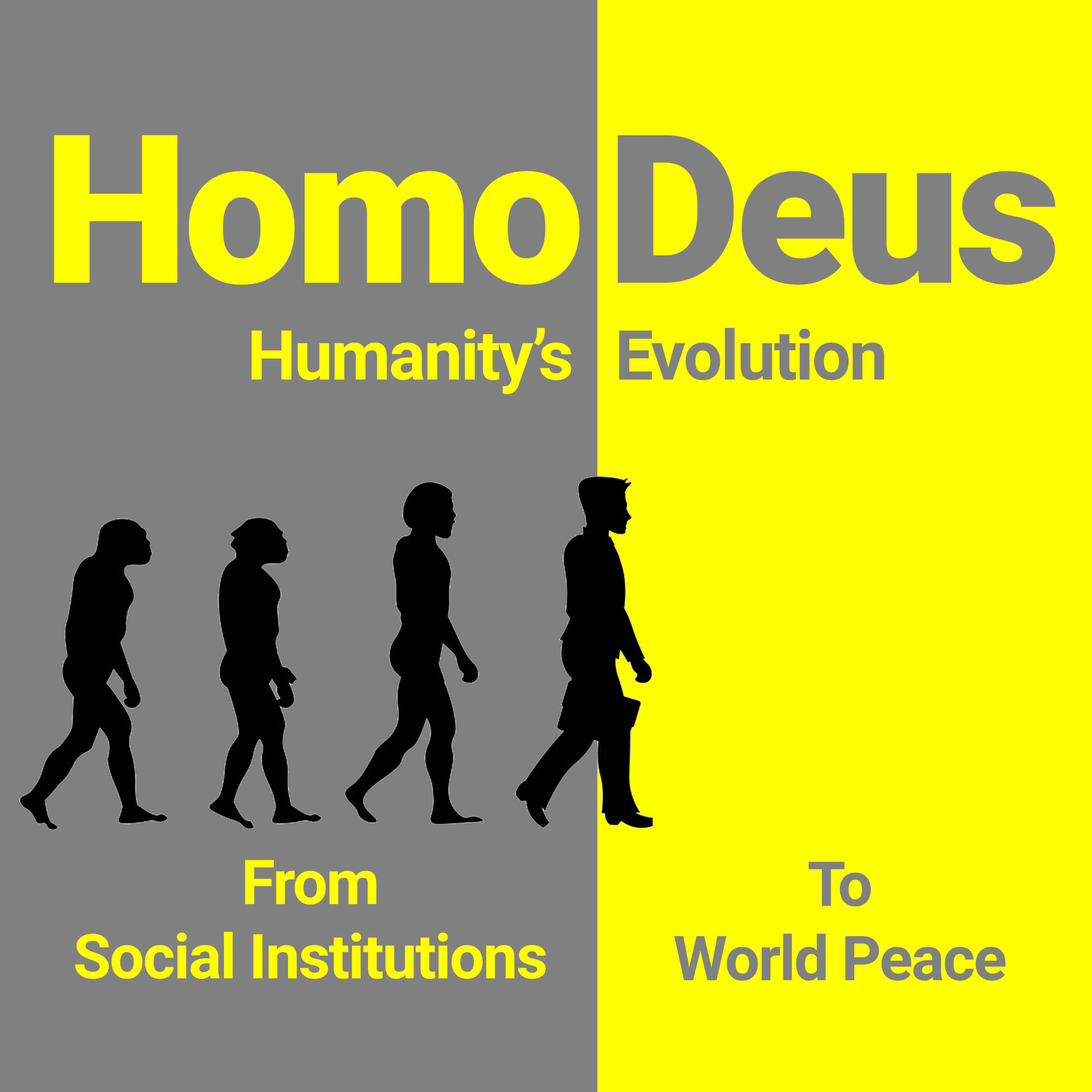
Homo Deus: Humanitys Evolution from Social Institutions to World PeaceAuthor: Brian
We are living in times of unprecedented technological development. Many of the tools and devices we invented 20 years ago are obsolete today. In his internationally best selling book, "Homo Deus: A Brief History of Tomorrow", Yuval Noah Harari observes that this development is continuing in important fields such as genetic engineering, regenerative medicine and nanotechnology. Harari predicts that developments in these fields will transform us into super-humans. We might become biologically enhanced humans, cyborg beings or possibly fully non-organic beings. At the same time though, Harari notes that this technological development, and the unrestrained economic growth needed to support it, are leading us to potential ecological catastrophe. This raises the question, can we keep on growing the economy indefinitely without facing ecological disaster? If our technological development is on a collision course with ecological disaster, maybe our future isnt just more technological development but something else all together? ...To gain a deeper understanding of who we are as Homo Sapiens, Harari looks back to the Cognitive Revolution, 70,000 years ago. Something changed for us in the Cognitive Revolution such that we went on to dominate all other species. Prior to the Cognitive Revolution, our ancestors had the best technology and highest intelligence on the planet for over a million years. Yet we remained an insignificant ape, with little impact on the ecology around us. So what changed? Harari points not to technology, but to changes in the way we cooperate. During the Cognitive Revolution we developed imagined orders that enabled large groups of strangers to cooperate together flexibly. Other animals are not able to do this, and this lead to our dominance. ... I really liked Hararis book. He is an excellent writer and has many great insights. But at the same time, I think he overlooked some aspect of human evolution that if properly considered, would lead to a differe Language: en Genres: Science, Social Sciences Contact email: Get it Feed URL: Get it iTunes ID: Get it Trailer: |
Listen Now...
#11 Practice Makes Perfect
Episode 11
Monday, 15 February, 2021
In episode #10 we completed our review of Harari’s book, but there is still a little bit more to talk about. Throughout this podcast I have referred to re-training our desires and learning new methods of cooperating, but I haven’t discussed many details. In this wrap-up episode, we will consider what this training might look like. What kinds of groups might you join? What are the common pitfalls for these groups? We will finish by considering how this training might be the missing ingredient in our efforts to address climate change.For comments and questions: brianpracticingforpeace@zohomail.comTranscript: https://brianpracticingforpeace.medium.com/11-practice-makes-perfect-ec6b16d07095 Hosted on Acast. See acast.com/privacy for more information.