 |
The Metrics Brothers (fka SaaS Talk)Author: Ray Rike & Dave Kellogg
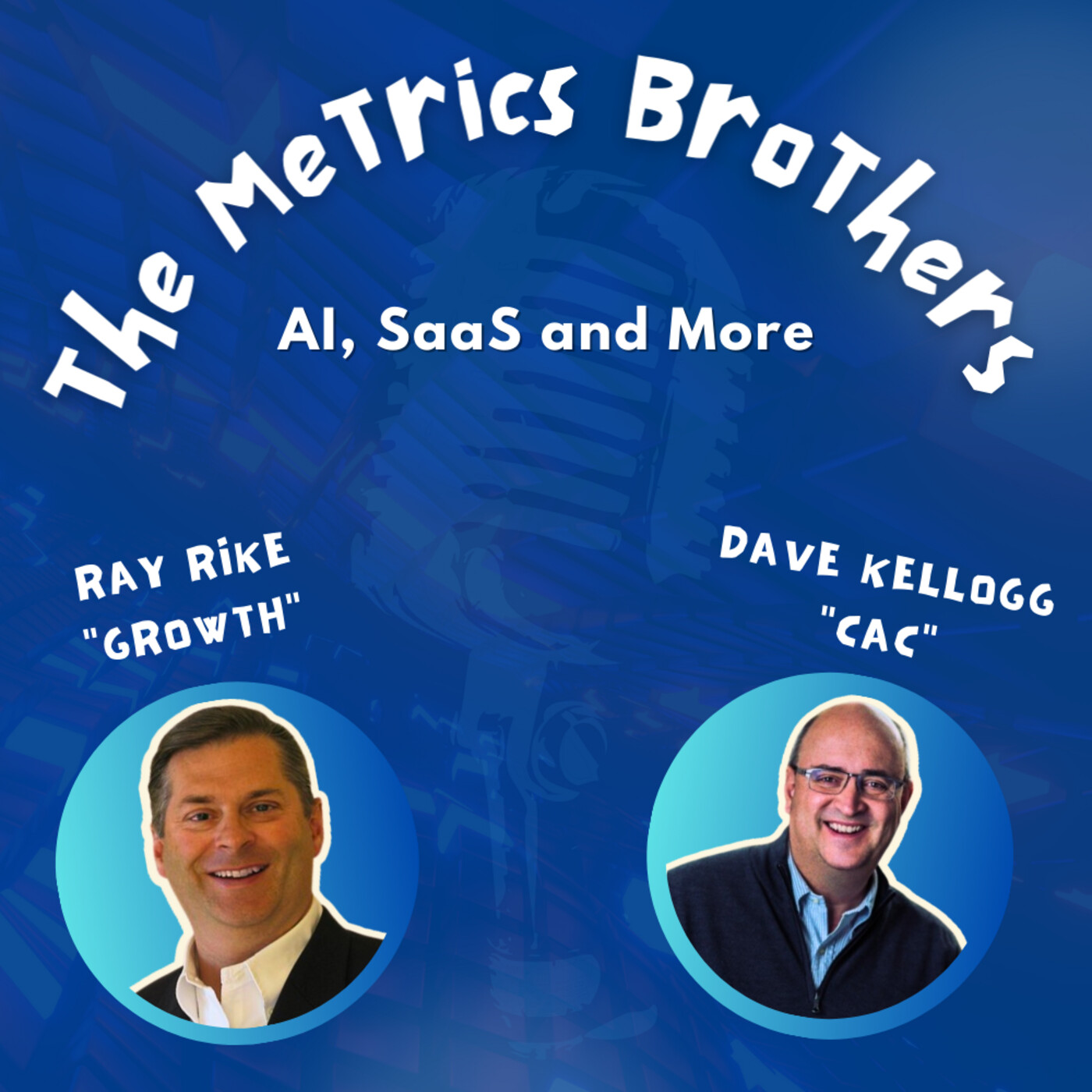
The Metrics Brothers (formerly SaaS Talk with the Metrics Brothers) is hosted by Dave "CAC" Kellogg and Ray "Growth" Rike. The Metrics Brothers provides unique insights, strategies, tactics and the metrics that are relevant to Native-AI and B2B software and SaaS companies.Each 20-minute episode will cover a topic critical to leading a B2B software company, and chalked full of practical advice that can be introduced and applied in most Native-AI, Agentic AI and B2B software and SaaS companies. Language: en Genres: Business, Management, Technology Contact email: Get it Feed URL: Get it iTunes ID: Get it |
Listen Now...
A Tale of Two AI Futures - Citrini vs Citadel
Episode 113
Wednesday, 4 March, 2026
In this episode, Dave "CAC" Kellogg and Ray "Growth" Rike go point-counterpoint on two high-profile articles making waves across Wall Street and Silicon Valley: Citrini's provocative February 2025 report, The 2028 Global Intelligence Crisis, and Citadel's rebuttal, The 2026 Global Intelligence Crisis.Dave and Ray unpack whether AI is truly triggering an unprecedented economic collapse or whether Citrini's dark simulation is, as one economist put it, just "a scary bedtime story." They dig into the SaaS private credit contagion theory, the historic parallels of labor displacement, the role of government regulation, and why this particular AI scare hits closer to home than any previous tech disruption. As always, the brothers bring the receipts, including nearly 20 sources and 20 hours of research - so you don't have to.Full Episode Summary:Dave Kellogg and Ray Rike open by framing the episode as a tale of two AI futures: Citrini's alarming speculative simulation versus Citadel's data-driven rebuttal.The Citrini Case (Bear Case): Published February 22nd, Citrini's report simulates a scenario in which rapid AI agent adoption triggers a global intelligence crisis by mid-2028 featuring 10.2% unemployment and a 38% drop in the S&P 500. The report argues AI is categorically different from prior technology waves because it displaces cognitive workers, who represent roughly 75% of U.S. labor income.Citrini further warns that SaaS, already accounting for 23% - 25% of the $3 trillion U.S. private credit market could become the chip in the windshield that cracks the broader financial system, with ripple effects into insurance and the broader economy. Dave and Ray note that Citrini's word choices ran 3.4-to-1 negative, and flag that the firm may hold short positions — characterizing the piece as well-crafted "bear porn."The Citadel Rebuttal (Bull Case): Two days later, Citadel, a $65B AUM asset manager with 35 years of credibility responded with a data-driven defense. Software engineering jobs are up since January 2024, AI CapEx is 2% of GDP and AI-adjacent commodity pricing is up 65%. Citadel argues AI follows historical S-curve adoption patterns, that "recursive capability doesn't equal recursive adoption," and that technology has always complemented rather than replaced labor - pointing to Microsoft Office as a historical analogue.Dave and Ray's Take: Both hosts find Citadel more credible, but acknowledge real displacement risks ahead. Their key insight: the reason this particular AI scare is generating 10x more fear than past labor disruptions (auto workers, telephone operators, elevator operators) is that this time it's us — white-collar knowledge workers facing displacement. Ray adds that blue-collar jobs (truck drivers, Uber drivers, warehouse workers) face equal or greater long-term risk from AI plus robotics, but those disruptions don't generate the same visceral fear in the media and investor class. Both agree the timing of adoption is the biggest unknown. Long-term, history favors the Citadel view. Short-term, the transition could be painful.On Government Response: Dave and Ray agree that political and regulatory intervention is inevitable if unemployment spikes materially, whether through labor protections, AI regulation, or fiscal stimulus.On Economists' Reactions: Real economists, including Noah Smith (Noahpinion) and Wharton's Jeremy Siegel, largely dismissed the Citrini piece, wi Siegel arguing that productivity gains generate new income and demand, Smith calling it a "scary bedtime story." Dave's takeaway for operators: let the Metrics Brothers do the 20 hours of reading so you don't have to.See Privacy Policy at https://art19.com/privacy and California Privacy Notice at https://art19.com/privacy#do-not-sell-my-info.