 |
The New Student Pharmacist's Podcast ExperienceAuthor: D.J. Ferguson
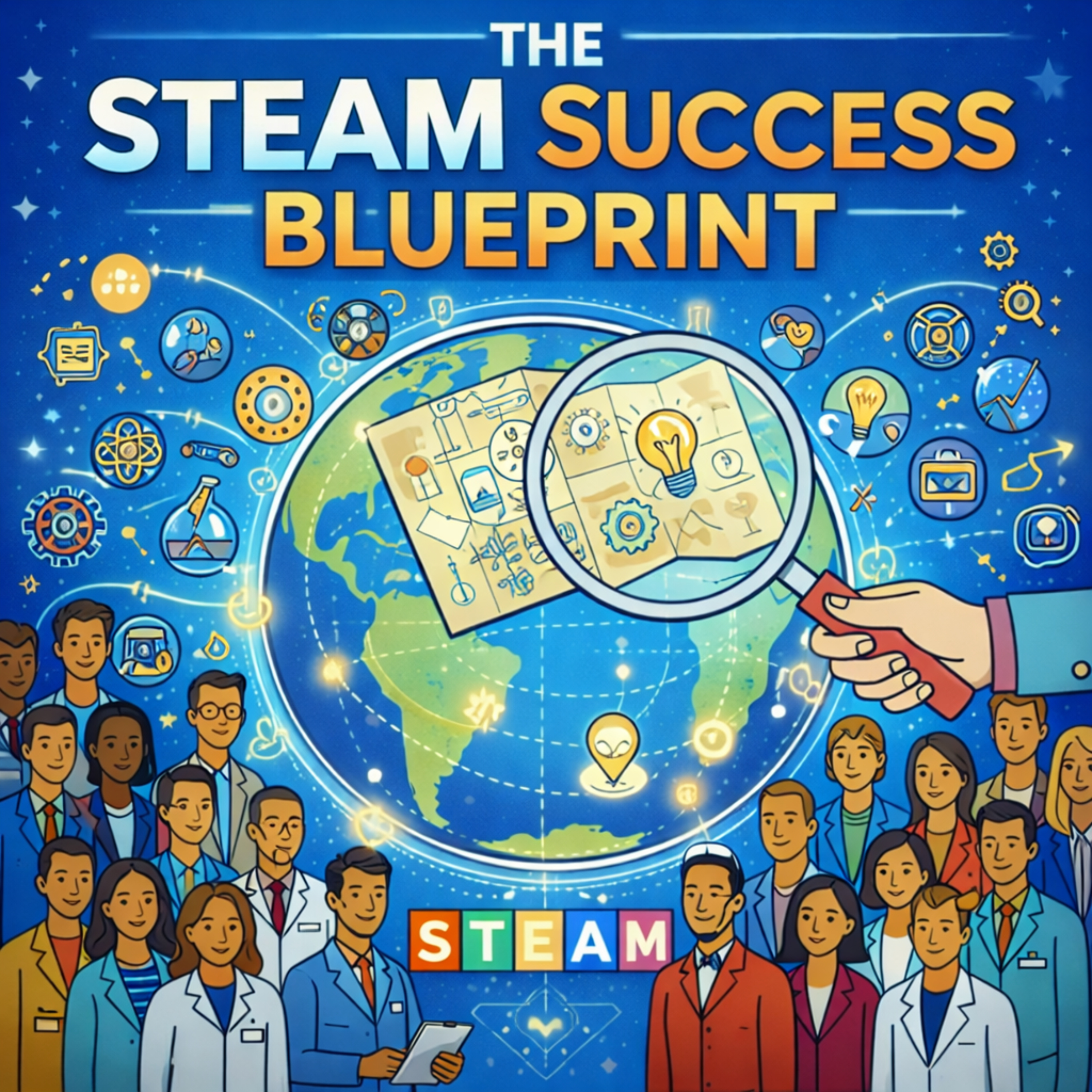
The STEAM Success Blueprint deconstructs career acceleration strategies from the world's top science, technology, engineering, arts, and mathematics leaders. Host The New Chemist, interviews MIT legends, Ivy League chancellors, biotech pioneers, and leading research directors to extract actionable blueprints you won't find in textbooks. Previous guests included: Provost R. Beyah, Dr. R. Langer, Chan. G. May, Amb. S. Collie, G. Zuckerman, Dr. C. Hardy, K. Woumn, Dr. V. Miranda, Dr. J. Burrows, J. Desmond PhD, A. Utthayakumar MEM & more to discuss career blueprints. Language: en Contact email: Get it Feed URL: Get it iTunes ID: Get it Trailer: |
Listen Now...
Afro-Futuristic Themed- The STEAM Success Blueprint: Why Not You? — Romeo Mays's Growth and Path to a Career in Physical Medicine and Rehabilitation
Saturday, 17 October, 2026
In this episode of The STEAM Success Blueprint, host David Ferguson( a fourth-year pharmacy student) sits down with Romeo Mays, a fourth-year medical student at PCOM in Philadelphia applying to residency in Physical Medicine and Rehabilitation. Romeo opens up about growing up in the Bay Area balancing competitive basketball with a science-driven environment shaped by nearby institutions like Stanford and Cal, choosing a Master's in Organizational Leadership over a direct path to medical school, and the imposter syndrome that he encountered. The conversation moves through what "intelligence" really means once memorization stops being enough, how one conversation with a friend turned into a medical-school content platform followed by thousands, and why Romeo believes the biggest thing holding people back is rarely ability , it's exposure. David also previews an early build of his own Bahamian-set chemistry textbook and gets Romeo's live, on-the-spot reaction to it.In this episode:Growing up in the Bay Area near Stanford and Cal, and how that environment shaped Romeo's dual pursuit of basketball and academic excellenceChoosing Dominican University of California for biology, and why chemistry and psychology became his minorsThe COVID-year decision to pursue a Master's in Organizational Leadership at the University of Redlands instead of heading straight to med schoolConfronting imposter syndrome in his first two years at PCOM, and redefining what "intelligence" actually meansThe third-year rotations — OB, family medicine, radiology, surgery — that reconnected him with his reason for pursuing medicineThe origin story of his content platform, @romeomaysjr, and the first-generation students it was built forHis current focus on sports medicine, adaptive sports, and pediatrics as he applies to PM&R residencyA live look at David's in-progress chemistry textbook and Romeo's real-time feedback on itWhy "comparison is the thief of joy" and "why not you?" have become two of Romeo's guiding principlesFollow & Subscribe:🎧 Follow us and subscribe to us on Apple Podcasts: The STEAM Success Blueprint👉 Follow us, young leaders, on Facebook, Instagram, and LinkedIn: https://www.linkedin.com/in/david-ferguson-458b97aa/🔗 Connect with Romeo Mays on Facebook: https://www.facebook.com/romeo.mays.71 or Instagram @romeomaysjrGuest Biography: Romeo Mays, a great young leader, who is a fourth-year medical student at the Philadelphia College of Osteopathic Medicine (PCOM), currently applying to residency programs in Physical Medicine and Rehabilitation. Raised in the Bay Area of Northern California, Romeo earned his Bachelor of Science in Biology from Dominican University of California, with double minors in Chemistry and Psychology, while playing collegiate basketball throughout his undergraduate career. After an extra year of NCAA eligibility granted during the COVID-19 pandemic, he continued playing basketball at the graduate level while earning his Master's degree in Organizational Leadership from the University of Redlands.A first-generation college graduate now finishing his medical training, Romeo's clinical interests include sports medicine, adaptive sports, and pediatrics, fields that let him draw on his own background as an athlete to help patients regain function, mobility, and confidence. He is also the creator of a widely followed medical school content platform (@romeomaysjr), where he documents his journey through the pre-med and medical school process to demystify it for students , particularly first-generation and underrepresented students , who don't typically have a canonical roadmap of their own to follow.Outside of medicine, Romeo recharges by hiking near water, playing pickleball, and staying active around his neighborhood , chasing the same discipline outdoors that carried him through his hardest semesters.Please note: The views of this podcast represent those of my guest and I.