 |
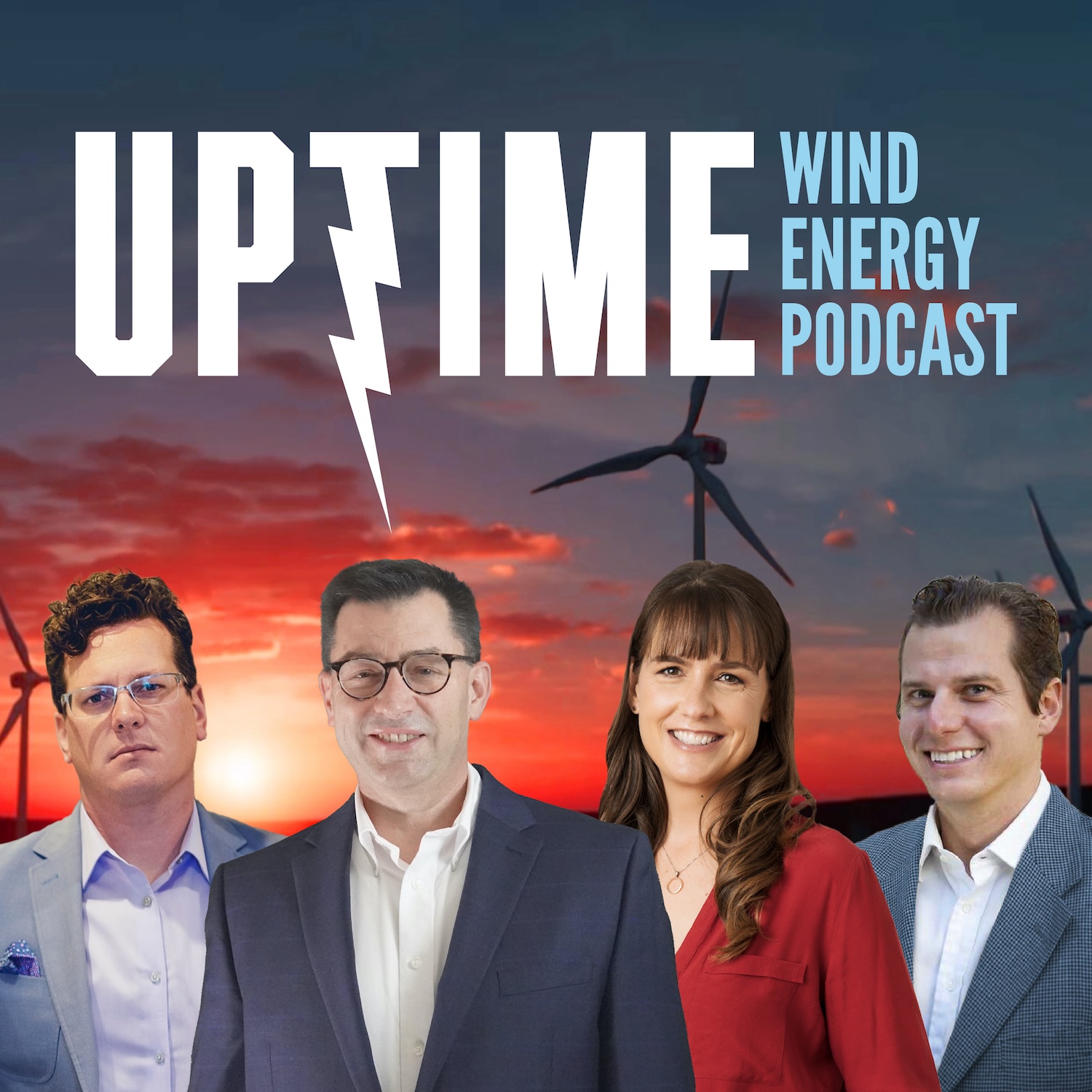
The Uptime Wind Energy PodcastA wind energy podcast all about protecting and improving the efficiency and uptime of wind turbines. Author: Allen Hall, Rosemary Barnes, Joel Saxum & Phil Totaro
Uptime is a renewable energy podcast focused on wind energy and energy storage technologies. Experts Allen Hall, Rosemary Barnes, Joel Saxum and Phil Totaro break down the latest research, tech, and policy. Language: en-us Genres: Earth Sciences, Science, Technology Contact email: Get it Feed URL: Get it iTunes ID: Get it |
Listen Now...
Record PPA Prices, GE Tries to Exit Vineyard
Monday, 27 April, 2026
US wind PPA prices climb to $79.40/MWh as the IRA sunsets. Plus GE Vernova ordered to stay at Vineyard Wind, lessons from Spain’s blackout, and data centers straining the US grid. Sign up now for Uptime Tech News, our weekly newsletter on all things wind technology. This episode is sponsored by Weather Guard Lightning Tech. Learn more about Weather Guard’s StrikeTape Wind Turbine LPS retrofit. Follow the show on YouTube, Linkedin and visit Weather Guard on the web. And subscribe to Rosemary’s “Engineering with Rosie” YouTube channel here. Have a question we can answer on the show? Email us! The Uptime Wind Energy Podcast brought to you by Strike Tape protecting thousands of wind turbines from lightning damage worldwide. Visit strike tape.com and now your hosts. Allen Hall: Welcome to the Uptime Wind Energy Podcast. I’m your host, Allen Hall here with Nikki Briggs, who is in North Carolina this week, and Yolanda Padron who is back from the exciting wedding and weekend in Mexico. Welcome back, Yolanda. Yolanda Padron: Thank you. Excited to be here, Allen Hall: uh, this week there’s a, there’s a lot going on and we’re gonna touch upon some of it. Uh, Rosemary is over in China this week and Matthew is actually at Wind Europe in Madrid. And so this is gonna be an American focused episode mostly, but it’s gonna have global implications. One of the key items is PPA prices in the United States and with the on sunsetting of the [00:01:00] IRA Bills, uh, tax credits, and the whole infrastructure there with the one big beautiful bill when it crushed the IRA bill. PPA Prices needed to come up well. That’s happening, right? So developers, uh, can’t live without some money to compensate for the roughly 26, 26 7 20 $7 in PPA prices that were compensated by the tax credits. But, uh, when purchase price agreements have hit the highest level since they begin tracking it at Wood Mac. The average wind PPA now stands at $79 and 40 cents per megawatt hour up 24% from just one year ago now, Yolanda, you and I were talking before we started recording today about how low some of those PPA prices were two years ago, three years ago. Some of them were almost single digits. Yolanda Padron: Yeah, yeah. Some of them were pretty low. I [00:02:00] remember 16, $19 EPA prices and then a couple years ago we were looking at those and thinking, oh no, I can’t believe we, we kept those prices and they’re so low and everything’s changed so much, and the prices grown so much, and that was two years ago and now it’s, it’s, it’s, it’s almost four times as much as, as what we had originally thought, which is. Not super great for those older projects, Allen Hall: obviously, uh, when they, if they do repower, the extent they’re gonna have to renegotiate the PPAs. Right. The, the landscape has changed quite a bit. So the, the question really is now are they gonna be able to renegotiate new PPAs when the existing PPA hopefully ends? You can’t, you can’t run turbines for free and will they repower. Or will they just try to extend the lifetime? I think it’s a lot of operators trying to figure that out right now. And that’s in light of installations. So Whim Mac also says that US wind installations are [00:03:00] on track to nearly double in 2026, uh, building towards 48 gigawatts of new capacity through 2030, which all makes sense, right? That the, the. Uh, everybody’s trying to get all their assets in the ground so they, they qualify for the, the tax credits. So there’s a big push. So 2026 and 2027 are gonna be pretty busy years. Uh, but the, the negotiations are still going on and we’re talking to operators. Nikki and I have been talking to operators this past week or the last couple of weeks, honestly. There is all kinds of negotiations going on for turbines right now and who can get turbines? Can they get ’em in time? Can they get ’em planted fast enough? Nikki, it is causing a lot of operators to spend a great deal of time doing planning that they otherwise wouldn’t have been working on two years ago. Nikki Briggs: Definitely. I mean, it seems kind of weird to me because it’s like a weird spot. It’s like, um, you know, we want more power and we need to do all these projects, [00:04:00] but then. The permitting process is just like a brick wall or something, you know? Um, like it just takes them so much more to get through, um, and get it moving. Allen Hall: Well, I, I think if you have an existing site, you’re gonna repower it. I mean, that’s probably the easiest thing to do if, if you can pull it off. The, the question is how big of a turbine are you gonna purchase? A lot of those turbines that are gonna get repowered are probably 1.5. To two megawatt machines. They’re going to move up to five or six megawatt machines, generally speaking. So they’re reducing the amount of turbines that are gonna be on site. But the, the amount of power that’s delivered usually is about the same, maybe a little bit more. Which, which, which strives the, which drives the, the equation of, Hey, what’s everybody gonna do in the next couple of years with the data centers. Having listened to the GE Renova financial report for Q1 that just came out as we’re earlier today. GE is trying to sell gas turbines like there’s no tomorrow. However, the weird thing about it was that they were [00:05:00] very nervous about locking in firm orders that a lot of the deposits they had for like 2029 or moving into 2030. So they had a, a discussion about GE Renova building gas turbines. They could do about 20 gigawatts a year, but they had like a 10 gigawatt hole. In 20 29, 20 30 of orders because the data centers are realizing, like to get a contractor to put a hole in the ground so you can put a data center in is taking more time than they thought. It’s not Silicon Valley where you can just type some software. And Yolanda, you’re kind of in the middle of this right now, being in Austin, Texas. Is the, the drive for data centers and the drive for power, what it was six months ago, is that landscape changed? Has everybody come back to reality? Like building physical projects takes time. Yolanda Padron: I think people are starting to get, get back to reality from the little bit that, that I’ve been, that. I privy to, uh, I do think that you mentioned the GE renova and [00:06:00] just kind of all the changes and everything. And I know in the past we’ve talked about, um, the fact that, you know, a lot of blade manufacturers have changed hands for wind and a lot of things are uncertain in general. Um, I think right now with the boom of people trying to repower and doing everything as quickly as possible and as safely as possible, it’s really important that everybody should. Try to get as much documentation on everything as possible, not just to, to protect yourselves, right? I mean, if there’s some sort of, I mean, you’re, you’re, you’re checking that the foundation on your turbine is perfect still, um, doing all the civil engineering studies that you need to do and making sure that, that everything’s fine, um, for, for the long term, right? If you’re not, you’re not planning on repowering again in five years. Um. But just to track everything. There’s so much movement right now and so much uncertainty that at the very least, so you know, what you’re dealing with, if and when you have an issue, [00:07:00] you know, five years down the line, like, oh, this is what happened and this is why, this is who I need to talk to, or this is how I’m going to solve this. Or, you know, it’s not a new problem. Um, because it’s just, there’s just so many, so many factors changing. All at once that it’s, it’s a little bit, it’s a little bit daunting for everyone in this space. I don’t know if you guys feel the same way. Nikki Briggs: I have a separate question, um, which is, you know about these PPA pricing, if it’s going up, it continues to go up. Is the old adage about like green energy is the, is is the cheapest? Is that like out of the wind now? I mean, that’s not even. You can’t even apply that. Allen Hall: No, I think renewable energy, solar and wind are the lowest cost, fastest way to get power onto the grid. The, the, the question is, uh, will state and federal governments prohibit it? Because if you’re talking about the gas turbines, [00:08:00] which is not cheap, and you’re talking maybe the earliest is 20 30, 20 32. Uh, as when you be able to, to get something scale there. What else did there that you’re gonna build? Nuclear. Nuclear GE iss. Talking about nuclear small modular reactors again today. And they got a project going up in Canada, it sounded like that’s not vast either. So if you’re talking about speed and deployment, solar’s quick, right? You can just put ’em up and you can get wind turbines up pretty fast too. But anything that’s uh, gas turbine or god forbid, we start burning oil again to make electricity. Uh, I, I just don’t see it. This has implications obviously over in Europe too, right? So Wind Europe is this week, and it’s in Madrid, of course. And the Vesta, CEO, Henrik Anderson’s, uh, told the audience over in Europe that, uh, hey, there’s a lot of choices to be made [00:09:00] here the next couple of years, and it’s more important now than ever, uh, to. Think about renewables with the problems in the ous, straight of ous, sending prices higher. Does Europe want to be connected to a petroleum future? I think Europe has been struggling with that since obviously the Ukraine war started. So the, the problems in Iran are just gonna double down on that. The EU Energy Commissioner, uh, Dan Jorgenson, uh, called it out. Earlier this week and said it’s, this is not an energy crisis, it’s a fossil fuel crisis. So if we don’t have to rely on fossil fuel so much, then the energy crisis will hopefully come down in Europe. Uh, but one of the weird things about what’s happening and where Europe is, although Vestas and the EU energy Minister Commissioner are talking about fossil fuels and moving to electricity into more renewables, when [00:10:00] Europe is talking about, uh. Unfettered media posts that are, that there’s misinformation happening and, and how they’re going to deal with misinformation. That’s not their, to me it’s not their problem. Misinformation is not slowing down projects you, you have to deal with. Uh, obviously people are gonna oppose power plants, Tesla facilities, whatever’s going on in their neighborhood. The, there’s gonna be opposition to it. You have to learn how to deal with it. And I, I’m always shocked when, when a, a large organization, be it American Clean Power or, or Wind Europe or one of the many others, or complaining about misinformation, they’re in their information business. They need to be doing more work, laying the groundwork locally to deal with some of these issues. But it does feel like. Yolanda have seen this up close, uh, where there’s been sort of local disputes about, particularly wind, uh, that you, you need a little bit of help, right? [00:11:00] You can’t rely on the, the operator, owner operator to provide all the ammunition to, to, to fight off. Uh, you know, the, the generic Facebook posts about wind turbines killing birds or whatever they’re gonna post. Is, is there a, a, a future here where a a, a Wind Europe does a, an American clean power for that matter, do a better job of communicating why you would wanna have renewable energy in your backyard? Yolanda Padron: I think we just all need to just agree in general about what our approach is here. Right? Because we, I know there’s, we’ve talked about companies that really, really wanna do, you know, if, if you can. Produce X amount of money by creating wind power, then you’re, I’m gonna charge you X minus one. Right? Like, I’m gonna maximize my profits as much as possible. Um, and then there’s other people who are just really, really trying to, [00:12:00] to do with, deal with what they can. You know, they, you have 25-year-old projects that have been going on forever and ever. No one’s manufacturing them anymore. And people are still finding solutions to keep those alive. And then there’s, I know we talked about, I think it was Japan that was doing that really crazy work with these smaller turbines that, I mean, they already know what the issues with those turbines are. So just, just removing a lot of the factors going into something very experimental for, you know. We could all talk about the greater good, which is making sure that renewable energy is something that’s financially accessible. Right. I, I know we have a friend who’s been talking about it for a really long time and he said, you know, it shouldn’t be a thing of this is the right thing to do, should be a thing. This is the most cost effective thing to do, and I think he’s right. I think we should all just really try [00:13:00] to make sure that we work together. To make it the most cost effective way of producing energy, um, of solving all the problems that we can and not just, I mean, we can focus about competition later, right? If we really, really want to. Allen Hall: Let’s talk about the, the power demand for a minute. So, a number of states in the US have prohibited data centers altogether. I think the number I saw last was like 30 states have prohibited. Data centers main being the most recent one that I recall, where they just prohibited ’em in the state. That has to do with electricity prices. That the concern is if I have a couple of gigawatts being devoted to any, you know, uh, ai, Facebook, Google, uh, x, ai, any of those that my electricity rates are gonna go up and, and a lot of the states are putting blockades in essentially to prevent that from happening. That changes the landscape dramatically, right? [00:14:00] Where now, uh, if they were gonna put renewable energy in, in advance of ai, those projects are gonna die, obviously. Is there, is there a, a place where data centers, ai, electricity demand being increased, is met with renewables and some logic? Will that ever come to a place where everybody will be happy? Yolanda Padron: I mean, I think it can, in that case, I guess when Europe is correct in saying, you know, we need to stop the misinformation spread, right? But it’s also, I think it’s, it’s, it’s like one of those things where it’s like, it’s such a small part of the equation to make sure that the people who don’t exactly have a lot to do with the decisions that are being made. Legally, um, are on the same page. I think it’s more of, you know, the people who [00:15:00] are making these decisions need to come to an agreement on what’s, what’s best and what’s fiscally responsible for the area. Allen Hall: Would you wanna turn away? I, I think the thing about AI data centers and the issues that’s driving it, it’s once you have a AI data center up and running, there’s hardly anybody working there, so it doesn’t create jobs. A lot of times they don’t even have lights. Right? Why do you need lights? The computers don’t need lights. They’re just gonna sit there and run that. If it was bringing jobs, I think everybody would think differently about data centers. But because data centers don’t bring jobs, except in the power generation side, there’s not a big incentive for states to allow them. So I don’t see how this works. Right. At some point, somebody somewhere is gonna figure it out. That I’m gonna have to have a lot of excess electricity. Maybe it’s Norway and it has to be pretty cold again, Norway or Sweden, where I could put data centers and it, it may not even happen in the us. Is that what we’re, is [00:16:00] that what we’re gonna see? Nikki Briggs: I don’t know what we’re gonna see, but I’ve, I’ve heard that, um, aren’t they putting data centers in the, in the water now too underwater and like in the ocean and there’s talk about putting data centers in space and, you know, all kinds of things to, to find these different environments. But I think, um, with the. Increased demand and power that it’s gonna be all these data centers are gonna be taking. And as, um, we know AI is very exponential, right? So it’s, it’s growing exponentially in the use and, um, the adoption of it and the models are getting stronger and so it’s consuming a lot more energy, right? And so I feel like the switch back around to sustainability as, as, uh, like a core need of. Of the Earth is gonna have to, it’s gonna have to come back around for sustainability. I mean, because you can’t, you can’t just keep doing that. Allen Hall: I think the thing is, in, in Europe, they [00:17:00] obviously are interested in having some AI data centers, and that will be the, the growth plan of course, because they want to be able to compete with the rest of the world. So Europe will be in this mode of we need to create more electricity. But they want, at the same time, decouple from the Middle East and maybe even from the United States in terms of using, uh, petroleum based products to, to power their grid. I think that’s, that’s inevitable. So they’re gonna have to make a huge change in Europe. We’re, we’re looking at massive changes in the US who knows about China right now. Uh, what they’re planning to do besides pour money into everything, all the above strategy is what China seems to be doing. Does that then. If, especially, let’s just talk about the GE and over thing. So, Yolanda, I think this touches your point, which is GE and over win business is really not healthy. They lost about 300 plus million dollars in the first quarter, EBITDA wise, uh, compared to, uh, roughly a [00:18:00] year ago. It was like a hundred million dollars they lost. So the, the continued pain at GE Renova Wind. Uh, is maybe, which I thought was gonna flatline, it seems to be getting worse. All of a sudden. They think it’s gonna be better in the second half of the year. And maybe that’s true. Hopefully it is. But if you’re, if you’re talking about putting on more data centers, more electricity demand, just ’cause of population growth and your wind companies maybe besides vestus or not doing that well. Do we get there? Does, can we, can we do this? Can we actually turn this corner, make that turn, get onto, uh, more electricity, be able to compete against the world in AI and everything else, electricity wise. Is this gonna happen or is everybody gonna. Take a five year pause while they figure it out. Yolanda Padron: I just think that everybody’s just kind of running with their shoes untied, right? Like we’re all trying to race. Allen Hall: They’re running with scissors and the shoes untied. Yolanda Padron: Yeah, it is like it. I mean, eventually someone’s gonna have to [00:19:00] pause or trip Allen Hall: because you always wonder how serious some of these data center projects are because you hear the names like who? Uh, and the one that always gets me is, no, no offense to Stanford University, but. Lately, I’m hearing a lot of Stanford University graduates that are planning some massive power generation source of some sun type and just go, okay, no. Can we stop? Can we stop for a minute? No. Having a master’s degree from Stanford doesn’t know. You probably don’t know how to build a data center. Sorry. And you probably don’t know how to do distributed energy. You don’t. It’s just those are complicated and industrial things that take a lot of money and time and resources, so, no. So the, the reality of what is. Real that will be built, that’s gonna come due. I think there’s a lot of projects that were theoretical and grand and, uh, six months ago even are going to go kapoof, like pets.com. In 2001, it’s gonna be the same thing. Nikki Briggs: You’re dating yourself, Alan. Allen Hall: There was a time when. [00:20:00] When everybody was gonna be, be a internet billionaire, and one of ’em was pets.com, right? So pets.com was this pet store thing, and, and it was, they had a great URL of course, but as soon as, you know, there was any e you know, the, the, the, the, uh, planes hit the towers in New York City, poof, that thing was gone and they could sustain the, the economics of, um. The US at the moment, and when I think of Austin, I think all the tech bros are in Austin. Like you drive around Austin, you just see it. There’s a lot of smart people on the ground trying to do these grandiose things. Electricity generation is a hundred and twenty five, a hundred forty years old. That is an industrial process that is really hard to break into and you can’t AI your way into creating data centers. Does somebody realize that? And was the GE talk today? I’m gonna be the GE talk today, Yolanda, on the gas turbines. Obviously [00:21:00] they wanna take as many orders as they can or get place placeholder deposits in one of the GEs competitors is not even taking orders past 2030 ’cause they don’t think they’re real if they were real. I think everybody taking orders and I think they’re, they’re seeing the quality of that individual walking in the door trying to place, place that deposit and realize. They don’t know how to work EPC. Yolanda Padron: Have you seen, I know there’s, there’s been a lot of like memes right now about how the use of electricity in AI and data centers and it’s like, you know, we’ve increased exponentially, so we will continue increasing exponentially until the end of time. Allen Hall: Till the world explodes. Yolanda Padron: Yeah, exactly. And it’s like, I don’t think, I mean, to your point, like I, is it real like it. It could, it was sort of, um, it did grow a lot and it’s continuing to grow a lot. I just don’t know that it’s gonna be something where like everybody has a data center in their backyard, or everyone’s connected to a data center within a mile. You [00:22:00] know, Allen Hall: I think you’re a hundred percent right about that. So the realism is hitting the market, right? So as PPA prices increase and the realities of construction projects hits everybody, this is gonna slow down. Quite a bit. Yolanda Padron: I’m curious to see how long that’ll be before we overshoot it for the PPA prices. Allen Hall: Oh, you think, okay. That’s a, that’s a really good point because I, I was wondering that today, I’ve been telling people for two years now, as soon as they, uh, the tax credits sunset that PPA prices necessarily have to go up, they just have to go up the, the, the offshore wind PPA prices, were in the $150, uh, megawatt hour. Ballpark, uh, for a couple of projects off the coast in New York. I don’t know what they are in Europe at the minute. I, I should go look. I do actually do know. I should go back and look though. But the onshore prices are obviously much less, right? If you’re in the $80 per megawatt hour, although it does seem high, it is relatively [00:23:00] low compared to everything else you’re gonna be able to do. What, what are the choices you’re gonna do? What other, what other choices can you make? Yolanda Padron: What kind of structure are you gonna. Work with is if you’re increasing, increasing, increasing, and then eventually we’re gonna hit a plateau eventually, or like an almost plateau. But I highly doubt everyone’s gonna be able to forecast exactly when that is without overshooting it. Allen Hall: Yeah. I guess the question is how much is the overshoot. Is it a hundred dollars? Is it $120? Is it $150? Nikki Briggs: I have a question though, because are these AI data centers, are they meant to be running completely on wind power? Allen Hall: They in theory can’t. Right? Nikki Briggs: They need power 24 7. So Yolanda Padron: yeah, they need to have some sort of backup thing, so maybe even backup in the grid or something if it’s not something directly hitting it. A lot of projects are like co-located, so you might have wind and battery or wind solar battery or something. All together, Allen Hall: the XAI effort in Memphis, right? There’s, it is gas turbines, a bunch of gas turbines they’ve bought from [00:24:00] all over, but it has a pretty good best backup to provide stability to that. I think you’d have to do that, right? Nikki Briggs: You’d have to have a a, a failover plan or something. Yeah. Allen Hall: Having watched the internet and at different times of day, there’s nothing happening between like us time midnight and 6:00 AM. There is zero going on, and I always think does 24 7 AI data center need is so not gonna happen because when people are, if, if the data center is providing roughly national, or say it’s Europe, there’s, there’s, people are awake as a certain time of day and then they’re not. Right? So unless your data center’s gonna feed China, which it won’t, and Europe at the same time, or the US and Europe, it’s still, there’s just blocks of time where the. You just don’t need a lot of power. You just don’t need it. So the 24 7 demand, I think is not real Nikki Briggs: well, but they have to keep them cool. And you [00:25:00] know, I mean there’s like the environment inside of the data center has to be a certain, uh. Uh, specification, I guess. Right? One question that I, that I had come up here on the side, Alan, had you heard about the, uh, CEO from Vestas talking about the need for an energy union? Allen Hall: Yes, but this is not the first time it’s come up, uh, to, to try to, to gather everybody together. Ideally, if you’re thinking about the eu. Working together, and rarely does that happen, but if it were to happen, Vestas would be a huge winner in that. So would Siemens esa Honestly, the, the weird thing about all what’s happening in Madrid and at, when Europe at the moment is that sizzle’s back and they’re talking about doing projects in Europe and uh, I think a Donny is also talking about doing projects in Europe or providing turbines, right? So there’s. [00:26:00] Once Ming Yang was rejected in Scotland, which I thought was inevitable, I’ve always thought that the second place to go to get turbines that would compete with Avesta and Siemens is in India, and I do, because it’s an English speaking country, it does break down a lot of barriers. That’s for sure. And because obviously it was a, a, a British colony for a long time, there’s the relationship there. That would be it. It, I think something that makes, makes sense. So Vestus, who would obviously be the winner of all the offshore and maybe even some of the onshore projects in the UK may have competition. So although Vestas may be hoping for more of a energy block, which. Uh, could work, honestly. It could work and you could see a lot of wind and solar and batteries and hydro in, in Europe and obviously France with nuclear. I think [00:27:00] India has a really good shot at penetrating that market that would change the dynamics quite a bit. That would put pressure on Vestas to lower prices, no doubt. And so the, the, the dream scenario of Vestas is the only. OM standing in this huge demand market, which is all local to them. Uh, that may not actually turn out there. There could be some really rough patches here. If, uh, the so salons, a Donnies of the world, they can produce a five megawatt, six megawatt turbine. God knows if they could make a a 15 megawatt offshore turbine, that would put a tremendous amount of pressure on Vestus. Tremendous, and that would be harder to stop. I think from a a UK standpoint, very interesting times. Vestus is well suited to, to gain market share and is rapidly in the United States and a number of other countries, Australia being another, and Europe, but woo. Huh. The dream scenario never works out like you think it [00:28:00] will. It never does. As wind energy professionals, staying informed is crucial, and let’s face it difficult. That’s why the Uptime podcast recommends PES Wind Magazine. PES Wind offers a diverse range of in-depth articles and expert insights that dive into the most pressing issues facing our energy future. Whether you’re an industry veteran or a new. Wind, PES Wind has the high quality content you need. Don’t miss out. Visit PES wind.com today. So there’s been more information come out about the, this Iberian blackout that happened about a year ago. And as the, the details are, uh, published and everybody has a chance to review them, uh, one, one person to check out is, um. Howard Pinrose at Motor Dock and his chaos in Caffeine podcast, which happens on the weekends because he provides some good summaries about some of the latest news from the Iberian Peninsula and the reports that are being published. [00:29:00] The Iberian blackout and the role of renewables is very interesting. The, the problem that they had was, uh. Instability. So it, the grid was just generally unstable and they had a transformer fail and that just cascaded where, uh, they were disconnected from the rest of Europe. So the Liberian peninsula was just automatically disconnected and that happened relatively quickly. One of the things that could have supported the grid, and I think you’re gonna see changes happening, and Howard Pinrose was just in Washington DC with American clean power pushing for this, which is. As Yolanda knows, solar and wind have sort of two moats. They can follow the grid and produce power and just kind of follow along. Or better yet, they can form the grid and support the grid and be a resource when things get wobbly on the grid. And Spain learn that lesson really [00:30:00] well about a year ago, and I think we’re gonna find that all those solar panels that disconnected and because you’re in a following mode, protect mode. If they had had ’em in a, a more, uh, command role into managing the grid, that maybe the Iberian peninsula may not have blacked out. Maybe parts of it had because they lost a transformer, but there may be a role for renewables in terms of grid stability. Doesn’t that seem odd? Because the story and the mis, maybe the misinformation that’s happening around the world is, well, if the wind turbine isn’t turning, it can’t help monitor the grid. It actually can, same thing for solar. Those inverters that sit on the grid are actually thinking and working and reacting. So they can actually provide a lot more, uh, stability to the grid than maybe be some other resources at, at a lot less cost. Is there a scenario where we start changing the rules about wind and solar where we, instead of them playing dumb, that they become smart [00:31:00] and provide more stability? Yolanda Padron: Well, it happens a lot I think in Texas, right? We have, like you, you dispatch wind when you need it and you dispatch solar when you need it. And there’s a whole, I mean, the whole market. Behind the scenes that it’s for people a lot smarter than I am. But, uh, but yeah, I mean, you, you get, like, you’ll see sometimes wind turbines that are pitched slightly so they won’t generate electricity when it’s not needed, or they’re just free flowing when, I mean, it’s, it’s not necessarily to produce a lot of electricity or, you know, sometimes you’ll say, oh, you know what, I need this much. Energy from you at this moment, and so Sure. Switch. I mean, it’s, it’s literally a click of a computer. You turn it on, make sure the, that it’s dispatching energy, and then once you need it to be cut off, it’s cut off. Especially if it’s a co-located site, it’s a lot easier to make sure that you are [00:32:00] actually giving all the energy that you need to give in any given moment. Allen Hall: Because a grid reacts very quickly when things go wrong in the grid. It happens in seconds, and the only thing they can respond in seconds. Is renewables, inverter based resources. That’s the only thing you can respond. You can’t spool up a synchronous condenser to stabilize your grid in a couple of seconds. You may need a couple of hours typically to get that going. Isn’t this where we’re going? It because of the digital age and everything is on off so fast. If I had a data center that, you know, it collapses pulling a gigawatt, man, you need to be react almost instantaneously to that. The only thing that can do it today if they chose to do it is wind, solar, and battery. That’s it. In the digital age, Yolanda Padron: I think it’s great. There was this one time, uh, a few years ago where, um, uh, a, a buddy who’s, who was a, a traitor for, you know, the, the, uh, energy markets in the [00:33:00] states. Um, he, he saw what was happening and he knew that he could. You know, he was controlling like wind, solar, and, and battery. And it was a co-located solar and battery site. And so he let them dispatch the solar for a bit and then he held off on the battery. And then the moment that he dispatched it was like he. Within like five minutes, it was $3,000. Something crazy like that. ’cause it was just like the mo, like he was just, everybody was amazed. Just the moment that he was like, amazing. Just like, well this is, this is why you do what, what you do. You know? Um, but yeah. Yeah, it’s, I mean, it’s a really, it’s a really interesting, interesting, for anybody that wants to read up on it. Like the, the market for that is really, really interesting. Nikki Briggs: It does sound really interesting and like, I’ve been thinking a little bit about, um. The, the role of wind and, and you know, in Colorado we have a lot of high wind and then we have this [00:34:00] wildfire danger as well because of the drought. And so what happens when it gets really, really windy is they turn off the power ’cause they don’t wanna start a fire, a wildfire. So, um, so you know, here you want the wind so that you can generate the power, but then you can’t give it. So how do you store that and how do you, you know, like how do you manage that, you know? It’s a, it’s a tricky situation. Yolanda Padron: Yeah. That’s where they’re co-locating. I think a lot of sites, there’s a lot of, I know there’s a wind farm in Arizona that’s really huge and they have a, a whole, they have a certain perimeter around it where they just really make sure that there’s nothing that can spread there. Like it’s, it’s just. Kind of barren land, so in case there is a wildfire or anything, ’cause it’s in a very dry area. Um, nothing will really happen to that in theory, you know, that has all the systems for the battery. Nikki Briggs: What if the, what if the electric transmission lines are what, you know, causes the fire [00:35:00] because of the wind? The wind is causing those to break or to fall down. The poles fall down and then they cause a spark. And then they cause a fire. That’s what happened in Colorado a long time ago, a couple years ago. Allen Hall: Same thing in California. Nikki Briggs: So in order to protect from that, there’s like, it’s super windy. So they turn off the power. Allen Hall: Does it make it right? Right. Well this, this comes back to the infrastructure of the United States and how old that it is, and if you pay attention as you drive across the US you’ll realize that some of the. Towers and some of the infrastructure that you see on the side of the road. Dang, you’re a hundred years old and it doesn’t get replaced. It was never meant to be replaced. Or maybe they thought we were gonna be living on Mars in a hundred years, but basically it’s the same. Technology. It’s a wire on a kind of suspended up there in the air, and the wind moves around and it’ll burn and it wears out. It just wears out, right? Eventually you’ll just wear through that stuff, and we’re seeing that [00:36:00] across the United States. You’re seeing it in Europe, you see it in Spain, in other places where the infrastructure has just has a lot of age on it until we decide to do something new and refurbish it, like we refurbish the roads all the time. Uh, we’re gonna have trouble. We just are gonna have trouble in the states. Yolanda Padron: Alan, as an electrical engineer, I do have a question. So would the forecasted generation needed by all these data centers and stuff, like with our current system, would we be okay with that? Or what kind of changes would we need to make just as a country in general? Allen Hall: I think the problem with. A large data center as you’re seeing some of them being built on the east coast right now is one, trying to keep them up and running. Two, the infrastructure that are feeding and it’s old, right? So the transformers and all that. The things that don’t move, that are just planted on a concrete pad [00:37:00] that’s seem like they, they would never age, age, had fail. Eventually. So when you put a big demand on existing infrastructure that’s kind of powering old light bulbs and um, motors and things that are old and that have very well-known patterns, and you start putting these, uh, basically big digital power sinks that go up and down in in power usage. The grid can’t take that. It just won’t be able to take it at scale. It’ll take it for a while and we’ll figure out a way because electrical engineers tend to be pretty sy um, at how to make miracles out of, uh, uh, uh, of questionable things. That’s how we, how we do that, that’s why we get paid so much. But the, the, the problem is, is that at some point it’s gonna break, right? And, and the, the electrical grid in the US and the people that support that. Internally, I think we’re getting a little bit worried about it [00:38:00] and trying to figure out what we can do to keep the grid up and running. It’s a huge problem, huge problem, because when the grid was built back in the late 18 hundreds, early 19 hundreds, there were a lot less people, and somehow we managed to get to about 350 million people. All with the mobile phones and big screen TVs, and now electric vehicles and laptops, and blahdy, blahdy, blah. How this thing is still running is a miracle. It really is it. It obviously is Yolanda Padron: delamination and bottom line. Failures and blades are Allen Hall: difficult problems to detect early. These hidden issues can cost you millions in repairs and lost energy production. C-I-C-N-D-T are specialists to detect these critical flaws before they become expensive burdens. Their non-destructive test technology penetrates deep into the label materials. To find voids and cracks. Traditional inspections completely. Miss [00:39:00] C-I-C-N-D-T Maps. Every critical defect delivers actionable reports and provides support to get your blades back in service. So visit cic ndt.com because catching blade problems early will save you millions. So G Renova was ordered by the courts just recently to stay at Vineyard Wind. Vineyard. Wind had. Filed a complaint that, um, GE was gonna leave the site, uh, off the coast of Massachusetts at the end of April. That obviously caused some concern with vineyard winds, so they went to court, sort of bypass the arbitration process. According GE went straight to court to get an injunction to prevent GE from moving on. Well, they have that injunction now, and GE has to stay on at least for about the next 60 days. If I read this right. Then there’s gonna be more court proceedings. GE is trying to get it back into arbitration where they can do some negotiation, but it’s all about big, big dollars.[00:40:00] The one thing that came out with Scott Straza, uh, Q1 discussion, which was uh, a phone call today, had to do with the completion of GE Ver Nova’s offshore wind projects, and when they could be complete. That includes sort of the doer bank projects in the uk, which I think are gonna wrap up sometime in 2027 to try to get those finished and vineyard wind, which they said was gonna be finished at the end of April. So from a GE Renova standpoint, I think they’re considering vineyard wind to be done at the end of the month and that’s gonna be their position. It was very odd. To hear the CEO of GE Renova talk about something that’s in litigation. ’cause usually that doesn’t happen. But if the company position is, Hey, we’re leaving at the end of April, we’ll see you a vineyard wind. That’s a problem. And let me explain a little bit of the details of this. GE Renova is based in Cambridge, Massachusetts, not that far away from vineyard wind, which [00:41:00] is also based in Massachusetts. So you have this corporate entity, which just. Opened an office in Cambridge. It’s really swanky place, not very far from where MIT and Harvard and all the, the elite universities are just outside of Boston. And then you have this vineyard wind project, which is important to the state of Massachusetts where they need that power to happen and they need it to be sustained and needed to run properly inside the state of Massachusetts. There must be huge discussions about this in the state government. Massive discussions about how these two entities have to work together for the next 20 years, and they are really at each other’s throats. That’s not the way you wanna start an offshore project. And Yolanda, you’ve been around some of these offshore projects. Is it always this tense between the OEM and the operator? Is, is this where all these projects end in some sort of disagreement and [00:42:00] separation? Yolanda Padron: No, I think, I mean, from my experience. There’s usually someone at some point, and it’s usually, I think, I mean the. The owner, but you’ll stop and say, okay, I need to work with this person. I need to work with this company for the next X amount of years. I need to make sure that they give me the proper documentation once I need it. I need to make sure that they’re doing things in good faith. You know, I mean, if I can’t, it’s not like the technicians have like a camera strapped onto them to, so you can monitor every single blade repair, right? Like you need to make sure that they’re doing things right. Um, and not just patching things up because. Because they’re mad at you. Uh, so, so, no, I think it’s, it’s a little bit crazy to me that no one’s yielding as much. Allen Hall: I think GEs position is we’re gonna give vineyard all the manuals and the equipment would be up and running. You can find somebody to run it. You, you, you think that’s possible On a brand new turbine that [00:43:00] is only one other places on the planet that’s being run, which is over in the uk. Are you gonna be able to find people if GE walks off? Yolanda Padron: I mean, even if you can find people, once GE walks off, it’s like you, you need to be able to train your technicians. You know, like all of these, all of these projects are you, you need to have them in constant supervision. You need to make sure that everything’s working smoothly and you can’t just afford, I don’t know if we’re being really optimistic, like a month of no one touching those turbines. That’s crazy. Like anybody in the wind world is even onshore. Could you imagine if we just walked off a site and just let the wind turbines just be for a month? Like that’s, I mean, I don’t know, I, I’m not super, super well versed in exactly what they’re getting, but are they getting any sort of, at least like technical support? Allen Hall: I don’t think so. No. Yeah, Yolanda Padron: no rock system, no. Nothing. Allen Hall: If it all works out like GE wants it to, [00:44:00] no. You get the manuals. You get a, a, a nice, uh. Card in the mail saying Thank you for your business. And that’s it. It, that’s, I think that’s where it’s going. Nikki Briggs: Doesn’t seem like a good way to, like, doesn’t seem like they’re stand standing behind their product or what they sold. Um, I mean, and it seems like there would be some downstream ramifications for other, other companies that want to buy ge. Allen Hall: They don’t wanna be in that business. I, I think that’s one of the discussion points that never comes up when the quarterly calls is. Is GE gonna remain in the wind business? Because I think the answer to it is maybe how could a lot, I mean, you said on the financial side of some of these, uh, wind farms and paid attention to the details. If you were losing a billion dollars a year, how long would you be in that business? Yolanda Padron: I mean, not very long. I think you’d have to change things to make it work. Um, yeah. I mean, I don’t know. I think, [00:45:00] I think it’s one of those things where they’re trying to. Find exactly where they fit into this business, if they still fit in at all. Uh, I really hope they don’t fully back out because of everyone that’s in operations that has GE products out there that’s really gonna need that support. Uh, I think especially for a vineyard’s sake, at the very least that they’ve are doing, that vineyard is doing a better job than a lot of the operators I know at making sure that. Everything you need within operations has been asked for since development and construction. Um, I’m not super, super optimistic about that. Just because like everyone has so many things to do that you don’t like if you’re in development, you don’t always have time to think about. Oh yeah, I really hope they give me the repair manuals in case there’s a lightning strike on the blade at R 20. You know, like it’s just, um, so it’s just. It’s, [00:46:00] it’s just gonna, it’s gonna be a very interesting case study. Whatever they end up doing, I think it’s gonna be something that will be worth following a bit more closely. We’ve seen, there’s been projects where, you know, day one, the OEM just backs off, but that was at least. They knew that, you know, the, the owner knew it two years in advance, and so they tried to get as many people as possible. There were to, to get on those turbines. There were of course mishaps and stuff, um, and it was more of a financial than an engineering decision. Um, but when the decision was made, people knew about it and people had time to act. I mean, people having a week to find, I. Someone to, to, to take care of every single aspect of their site is a little bit insane. Especially, I mean, [00:47:00]with the history of veneer, right? Like, come on, they had a, they had a blade break, Allen Hall: right? There’s gotta be a lot of questions about the durability. There has to be Right. Even if, even if GEs figured it out, and I think they probably have, and then they’ve put a, a lot of money and time into resolving the issue. You still have to wonder. Is it right? And if you’re vineyard, I think that’s one of the questions is, is it right and could we operate it by ourselves without needing a lot of handholding from ge? Or paying GE more money than we already agreed to, which is probably what’s likely to happen, right? That GE iss gonna ask for more money if they can break the contract legally and renegotiate, that would be a smart move. I think they will try to do it. It’s unfortunate and it causes a lot of grief for a lot of people, but I think GE probably needs to renegotiate and probably Vineyard wants to renegotiate it too ’cause they both feel disgruntled at this point. Yolanda Padron: Yeah, and I think it’s really interesting ’cause we focus a lot on vineyard and just the [00:48:00] way that the OEM and the owner operated with each other just because it gets, it’s so close to such an important part of the country that gets so much PR all the time. It’s just, it kind of sets the mood for a lot of things that go on. So it’s, I mean, it’s not that we’re just picking a lot of vineyards, it’s just really, it’s a really important site just in general from where it is, right? It’s not like it’s in the middle of nowhere. It’s a very important place that gets a lot of attention Allen Hall: that writes up another episode or the Uptime Wind Energy Podcasts. If today’s discussion sparked any questions or ideas, we’d love to hear from you. Reach out to us on LinkedIn and don’t forget to subscribe. So if you never miss an episode, if you found any value in today’s conversation, I mean any value, please leave us a review. And those reviews, we actually. Take and use to help create the next episode. So send us your notes, send us your comments. Send us what you would like us to discuss. Because the wind energy marketplace and [00:49:00] development are changing so rapidly, it sometimes it’s, it’s faster than we can keep up with. So please send us your ideas. Uh, and anytime you have a chance, please like and subscribe because it really helps other wind energy professionals discover the show. So for Nikki and Yolanda, I’m Alan Hall, and we’ll see you here next week on the Uptime Wind Energy Podcast.