 |
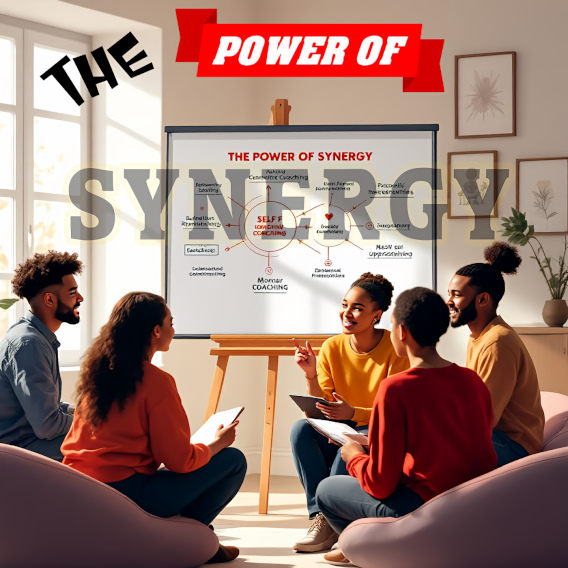
The Power of Synergy with Gabrielle CardonaThe Relationship Coaching program Author: Gabrielle Cardona
The Relationship Coaching program, knowing yourself, understanding others, insight into human predispositions, what's behind a person's behavior, anticipating another's action, learning about personality traits. Do you know what the things people say mean? How do you interpret their actions? Try taking a look at their personality! There are 16 different personalities, and one statement from one person can mean something completely different when coming from someone else. Learn about what's behind behavior. Information from "experts" can confuse people. It is inaccurate. If you attend an MBTI seminar, you'll walk away knowing AND understanding what people do, how they do it, and why they do it. You'll also understand yourself. Language: en-us Genres: Relationships, Science, Social Sciences, Society & Culture Contact email: Get it Feed URL: Get it iTunes ID: Get it |
Listen Now...
The Power of Synergy, October 12, 2026
Monday, 12 October, 2026
The Power of Synergy with Gabrielle Cardona Synchronize to Synergize: The TIP Method, Functional Levels, and Principles for a High-Quality Life Gabrielle Cardona hosts solo this week, breaking down her TIP diagnostic method, the Myers-Briggs functional levels that govern daily energy, and the goal-setting and emotional-management principles she uses to coach clients toward synergy. A Relationship Coach Explains Her Niche Gabrielle Cardona opens The Power of Synergy explaining that she has coached for twenty-three years, starting as a general life coach before specializing in relationships. She says that whatever topic clients brought her, career friction, weight struggles, or money management, the underlying cause always traced back to personal relationship issues. She introduces her diagnostic acronym TIP, standing for topic, issue, and problem, arguing that the situation people describe is only the surface topic, with a deeper issue and an even deeper problem preventing resolution. Cardona recalls her very first paying client, a Mormon district attorney who offered her sixty dollars an hour if she could explain why his seemingly perfect life felt unhappy. Using the Myers-Briggs Type Indicator, she discovers he is an INTJ working a verbally demanding legal job despite being an introvert, and helps him realize his thinking runs extroverted while his intuition runs introverted. He eventually leaves practicing law to teach it, and later arranges a speaking engagement for Cardona before two hundred fifty Phoenix professionals. Dominant, Auxiliary, Tertiary, and Inferior Functions After a break, Cardona explains the four levels of personality functionality using her daughter, an ENFJ, as an example. She shows that the last letter of a type reveals which middle letter is extroverted, making extroverted feeling the daughter's dominant function, introverted intuition her auxiliary, extroverted sensing her tertiary, and introverted thinking her inferior, since the tertiary and inferior are always the polar opposites of the auxiliary and dominant. She compares the four levels to breathing, eating, walking, and running, recommending roughly eight hours daily on the dominant function, four on the auxiliary, two to three on the tertiary, and only one to two on the inferior, warning that overusing the inferior function is like running while forgetting to breathe. She illustrates how an ENFJ and her brother, an ISTP whose functions run in the opposite order, can support each other by letting each person handle the activities that come most naturally to their own personality. Defining Goals and Honoring Personality Type Cardona outlines her goal-setting formula: define the destination specifically, honestly assess where a person currently stands, and recognize that personality determines how someone travels toward that goal, since driving, flying, walking, and biking are not interchangeable. She recalls a man in his sixties, a retired actuary at Kaiser Permanente, who told her he suspected he had been doing the wrong thing for forty-five years after retiring and divorcing. Testing him, she finds he is an INFP, a nurturing, sensitive, profound personality type despite decades spent in an ESTJ-style corporate job and a cultural upbringing that discouraged nurturing in Jewish men. She tells him his relationship needs run counter to everything his background taught him, comparing him to what Mexican culture calls a mandilón, low-maintenance and endlessly emotionally generous. She notes that NF personality types, INFP, ENFJ, ENFP, and INFJ, make up roughly thirteen percent of the population and are often expected to behave the way society expects women to behave. Facing Challenges and the Joy of Asking for Help Cardona turns to inevitable challenges, urging listeners to prepare for them rather than be surprised, especially if they are introverts who may not instinctively share their needs with loved ones. She repeats her founding principle that there is no neutral energy, meaning every person has an effect even on those they are not directly interacting with, and argues that asking someone for help gives that person the joy and fulfillment of giving rather than burdening them. She frames mutual appreciation, respect, and trust as what makes that exchange empowering for both sides. Cardona then cautions that lasting change takes time, advising listeners to adjust how much time they spend on their dominant and auxiliary functions by only five to ten percent at a time so the new habit can take hold gradually rather than collapsing under too much change too quickly. She promises to return with more specific, practical steps for improving quality of life with the people who share it. Self-Care, Hard Emotions, and Daily Affirmations Returning to the air, Cardona revisits the classic image of putting an oxygen mask on oneself before helping others, warning that some people twist that idea into an excuse for selfishness rather than a tool for better service to others. She names three common struggles her clients bring her: managing reactive emotions, shifting into a more positive mindset, and running low on energy. She reframes anxiety, fear, and anger as useful signals rather than problems, explaining that anxiety warns something could go wrong, fear warns something is going wrong right now, and anger signals that something has already gone wrong and needs repair. She then teaches an affirmation exercise, instructing listeners to write at least ten present-tense, complimentary statements in a one-to-three ratio, one fully believed, one half-believed, and one not believed but desired, posted in at least seven spots around their environment and read aloud five times daily to gradually rewire negative thinking into something healthier. Closing Principles for a Synergized Life In the closing segment, Cardona lists the universal principles she teaches every client. Communication should be honest without being brutal, telling the whole truth while still caring how the other person feels. People should give more than they take, remembering there is more joy in giving than receiving, while still accepting help graciously and paying it forward rather than refusing support out of stubborn pride. She insists positive energy is more powerful than negative and, though contagious, will occasionally repel people who are uncomfortable around it, which does not make it any less worth choosing. Her final principle, surrender to nature, asks listeners to accept what they cannot control, apologize when wrong, and extend appreciation, respect, and trust to the people around them. Cardona closes by reminding listeners that power carries responsibility and accountability, that no one should underestimate their own personal power, and that synchronizing with others creates synergy that can make the world better, before signing off until next week on BBS Radio.